Village of Key Biscayne | |||
| |||
Type of Activity | Visiting the Florida White House | ||
Location | |||
Location | Key Biscayne Florida | ||
Date of Activity | 1968 thru 1974 | ||
Coordinates | |||

Father Bob Libby shares stories of "Nixon on the Key"
The decades-long friendship between former U.S. President Richard Nixon and banker Bebe Rebozo would influence a presidency and change a tiny island enclave off the coast of Miami – but their beginning was an inauspicious one.
 |
| President Nixon and Bebe Rebozo return from a cruise on the Coco Lobo |
The story of Nixon on the Key, as told by Father Bob Libby in a presentation sponsored by the Key Biscayne Community Foundation and Key Biscayne Historical and Heritage Society, it all began in Coral Gables, when Rebozo and George Smathers were students together. After Smathers became a U.S. Senator, Rebozo, by then a business leader in Key Biscayne, decided to invite his former classmate and a group of friends to the island to go fishing.
“Among the senators who went fishing on Key Biscayne that day were three future presidents of the United States: Richard Nixon, John F. Kennedy and LBJ,” Libby recounted.
But for Nixon and Rebozo, it was not friendship at first sight, Libby said.
Rebozo reportedly told Smathers, “Don’t bring that guy back again – he doesn’t drink whiskey, he doesn’t chase women, and he doesn’t even play golf.”
In the years to come, Nixon may not have started chasing women – several of the stories Libby shared highlighted the President’s devotion to wife Pat – but he most certainly learned to play golf (a famous photo shows a smiling Rebozo and Nixon out for a round) and to enjoy a stiff drink: During one of Rebozo’s last conversations with Nixon, when Nixon said his doctor told him to “cut out the martinis,” Rebozo reportedly replied, “I’d get a second opinion.”
The friendship between the two men would last through failed and successful campaigns, a presidency and, of course, the Watergate scandal and Nixon’s downfall. Throughout, the island of Key Biscayne served as a backdrop, and itself was transformed by its most famous inhabitant.
When Nixon first visited Key Biscayne, Libby said, it was a tiny community of some 100 homes.
 |
| Key Biscayne Lighthouse |
It was 1950, and Nixon was a newly elected U.S. Senator from California.
He continued to visit the island throughout his term, staying in a rented home and later at the Key Biscayne Hotel. By 1953, Nixon, just 39, saw his political star rise even further: he became Vice President of the United States, serving with President Dwight D. Eisenhower.
 |
| Key Biscayne Hotel and Villas |
He continued spending time on the island in both bad times – after his defeat to JFK in the 1960 presidential election and losing the California Governor’s race two years later – and good: After he was elected President in 1968, he established his Winter White House on the Key at a Bay Lane Complex. It remained his southern home through the high point of a massive reelection win to the low point of Watergate.
 |
| Entrance to the Nixon Compound on Bay Lane |
As Libby told it, “He was reelected in 1972 in a landslide with the greatest electoral majority of over 500 electoral votes, and he also had the highest popular vote majority. And yet, in 1974, he resigned the Presidency of the United States.”
Many of the events behind those ups and downs have Key Biscayne links, according to Libby.
 |
| Inside the Miami Beach Convention Center awaiting President Nixon's acceptance speech |
Libby, noting Nixon appeared on the cover of Time magazine over 50 times, is still researching how many times “Key Biscayne” was the dateline of a national or international news story.
For starters, there was the 1960 election, when Nixon lost to Kennedy.
Libby showed photos of the two men greeting each other by a villa at the Key Biscayne Hotel, standing outside the hotel surrounded by reporters, and behind a lectern with a Key Biscayne Hotel placard. Nixon had come to the Key after the loss and was having dinner at the Jamaica Inn when he received a series of phone calls.
 |
| President elect Kennedy talks to reports at the Key Biscayne Hotel |
“One was from Eisenhower, one was from J. Edgar Hoover, one was from the attorney general, and one was from JFK,” Libby said. “The first three were encouraging Nixon to contest the election, because there had been some hanky-panky in Illinois and in Texas. But Nixon said that would take a year, and whoever was in the White House would be powerless. And because they were at the top of the Cold War, Nixon said, ‘I don’t want to put the country in danger.’”
He decided to concede, and Kennedy traveled to the Key to meet with him.
There are also plenty of events with a local link after Nixon did become President, Libby said.
The Jamaica Inn was the site of Nixon’s first interview with Henry Kissinger, his Secretary of State, and Kissinger was a crucial figure in a couple of events that had ties to the Village.
“One of the amazing things that happened on Key Biscayne that changed world history involved the Yom Kippur War,” Libby said.
Egypt and Syria had attacked destroyed the Israeli Air Force, and Nixon, on the Key at the time, got to work and re equipped the Israelis with American planes. It turned the war around and, as it was revealed some years later, potentially mitigated a nuclear threat, Libby said.
Also, Libby added, “Probably the most exciting, wonderful week of Nixon’s life occurred in January of 1973. He was newly re elected as President of the United States. Henry Kissinger had just gone to Paris and signed what he thought was a peace treaty to end the Vietnam War.”
 |
President Nixon with Henry Kissinger upon his return from the Paris Peace talks |
Nixon’s downfall also had Key Biscayne ties.
 |
| Watergate hearings |
“Nixon directed the driver to go to the Potomac,” Libby said. “There, he directed the captain to take them way out of range. They sat over the engine and talked into each other’s ear. Nixon told him where things stood, and Bebe told him, ‘You’ve got a choice. You can resign and leave in honor, or you can be impeached. It’s up to you.’ They went back to the White House, Bebe spent the night and went back to Key Biscayne the next day.
“Three days later, Richard Nixon resigned the presidency of the United States.”
 |
| The President's farewell speech |
 |
| President leaves the White House for his final flight |
He also told of the more personal moments that occur when a president makes a small island Village his part-time home: how Nixon heard Reverend Billy Graham was at the Key Biscayne Hotel pool, so he donned his swimsuit and went down to meet him; how a bellhop at the hotel was impressed that Nixon always remembered his name; how the Key Biscayne Yacht Club would open early to serve Nixon and Rebozo breakfast; how Nixon asked the Chowder Chompers to play Oh Tannenbaum when the German Chancellor visited him on the Key in 1971.
There were also stories about Nixon’s devotion to Pat.
Captain Jim O’Neil remembers Nixon asking him to take Pat and the girls around the island on his boat; many people can still envision them traveling down the canals and waving to people on shore. An island barber recalled the parking lot he shared with a florist being roped off by the Secret Service when Nixon wanted to buy yellow roses for his wife.
 |
| President and the First Lady on the Coco Lobo |
Libby added, “Nixon attended the [Key Biscayne] Community Church regularly, and when Pat Nixon died, he planted a yellow rose bush in the garden there at the church.”
Church is where many residents encountered the former president.
The Presbyterian Church was the island’s biggest at the time, Libby said, and Nixon attended with his cabinet, including Kissinger. The late Dick Cromartie, who helped found the Village of Key Biscayne and for whom the local American Legion chapter is named, was no fan of the President’s politics, but was impressed when Nixon approached him at the church after hearing of his heroics in World War II. “Nixon thanked him,” Libby said.
Nixon also went to the Community Church often, and one day the pastor saw him walking the beach with his pants rolled up and coat over his head.
The pastor introduced himself, Libby said, and Nixon told him, “I appreciate the fact that you keep the door of the church open. When I come back from campaigning, I’m usually all strung out, and I go and sit in the church for an hour or two to calm down.”
Walking the beach was something Nixon loved, and that drew him so strongly to the Key.
But the Secret Service didn’t think the Atlantic Ocean shoreline was a safe place for Nixon’s strolls, so, when he set up his presidential compound at the end of Bay Lane, “They bought a beach,” Libby said. “They bought the Nixon Beach, and he and his family walked there.”
 |
| Beach at the 516 House |
Neighbors remember being told to tread carefully:
“The Secret Service told them, ‘The minute the water splashes, the lights and the sirens are going to come on, so you’re going to have to behave,” Libby said.
The Secret Service were behind several humorous stories told by Libby.
He said the late Jean Ferris used to talk about how she always knew when Nixon was coming by the arrival of a tribe of Secret Service agents, clad in wild tropical shirts. She remembered, “When I saw the shirts and the grass on Crandon being trimmed, I called my hippie friends in Coconut Grove and they got out here with their protest signs.”
Mike Ruben, whose father owned and managed Burns Men’s shop, recalls the President coming in the store surrounded by a bunch of men in tropical shirts. One time, Ruben’s father was making a shirt for the President, and when he reached in his pocket for a measuring tape he was grabbed by two Secret Service bodyguards.
The Secret Service may have seemed omnipresent on the Key while Nixon visited as President, but after his resignation, everything changed.
Nixon continued to spend plenty of time in the Island Paradise, Libby said, but he declined to keep his Secret Service protection, and spent his time on the island in relative quiet.
Those years ultimately became the final chapter of the story of Nixon on the Key.
“After the resignation, Nixon lived another 20 years,” and, having stepped away from work, he did what so many do, albeit under much different circumstances.
As Libby put it, “He became a snowbird.”
Florida White House in Key Biscayne | |||
| |||
Coordinates: 25.69028°N 80.165°W25.69028; -80.165 | |||
Country | United States | ||
State | Florida | ||
County | Miami-Dade | ||
Elevation | 3 ft. (1 m) | ||

Jun 1972 to Dec 1973 to work at the Florida White House in Key Biscayne FL
Key Biscayne is a village in Miami-Dade County, Florida, United States
on the island of Key Biscayne. The
population was 10,507 at the 2000 census. As of 2004, the population recorded
by the U.S. Census Bureau is 10,324. Key Biscayne is located on the island of Key Biscayne and lies south of Miami Beach and east of Miami. The Village is connected to Miami via the Rickenbacker Causeway, originally built in 1947. Because of its low elevation
and direct exposure to the Atlantic Ocean, it is usually among the first Miami areas to be evacuated before an
oncoming hurricane.
Rebozo, the
son of Cuban immigrants who settled in Tampa in the 1890s, was known for his
quiet manner. He built a successful banking career by listening more than
speaking, and his bond with Nixon endured because he asked little in return.
Among the president’s inner circle, Rebozo was perhaps the one person whose
companionship came without political expectation.
More than
forty years after their friendship began, Rebozo stood beside Nixon once
again—this time at his hospital bedside in New York City in April 1994, when
the former president passed away. Rebozo had remained there quietly throughout
the day, just as he had quietly remained a constant presence throughout Nixon’s
life.
In the
months after Nixon’s death, Rebozo granted only a brief interview. Reflecting
on their friendship, he remarked that most people never truly understood it.
Their bond, he explained, had been built not on politics or ambition, but in
long evenings on the porch, boat rides across the bay, quiet dinners, walks to
the dock at sunset, and conversations about very little at all.
For years, Rebozo kept a framed photograph of himself and Nixon hanging on the wall of his bank in Miami. Nixon had given him the photograph in 1969. The picture remained there until Rebozo’s death in 1998, and after the bank eventually closed, the photograph was taken home by one of Rebozo’s nieces, who still keeps it on the wall of her Florida living room today.
President Richard Nixon purchased the first of his two waterfront homes, forming a compound known as The Florida White House, in 1969 to be close to his friend and confidant, C.G. (Bebe) Rebozo and industrialist Robert Abplanalp. There was a total of five houses plus the SSCP and helipad that made up the compound at Key Biscayne. President Nixon had two houses, then Bebe Robozo's home the SS/GSA house and finally WHCA/WHMO.
The Presidential compound at Key Biscayne was bounded by Biscayne Bay on the west, West Matheson Drive on the south, Bay Lane on the east, and a fence on the north.

The President's homes at 516 and 500 Bay Lane are the southernmost houses in the compound Bebe Rebozo owns and uses the house next door at 490 Bay Lane. The Federal Government leases the next two houses at 478 and 468 Bay Lane. The house at 478 Bay Lane, which is owned by Robert Abplanalp, was leased by the Government in February 1969 for use as an office for Secret Service and GSA personnel. Abplanalp purchased this residence after the owners expressed a desire to sell because of the heavy traffic of Government personnel. The house at 468 Bay Lane was leased in December 1968 and served as the telecommunications facility for the WHCA and an office for military aides to the President.
 |
516 Bay Lane prior to demolition (2004) |
 |
| 500 Bay Lane (1972) |
The comm center delivered a message there once and noticed a progressive poker pot on the table worth around $5,000. None of the participants wanted to be interrupted to sign for the message delivery! Among them, Pat Buchanan stood out as particularly friendly and approachable, always kind to everyone, agreed to sign for the message. On another occasion, a TTY message was delivered to Secretary of State George Shultz, who was immersed in a poker game alongside Alan Greenspan, Caspar Weinberger, and others. Shultz—having apparently lost a bet—was humorously displaying his famous "Tiger" tattoo on his backside. It was a surreal moment that underscored how, no matter what their age or status, when the guys got together with drinks in hand, anything could happen! The principal construction work on the Nixon compound by the Government began on December 15, 1968 and was largely completed by September 1, 1969. Nixon visited Key Biscayne more than 50 times between 1969 and 1974. During the summer of 1973 there was a new pool and lanai/Florida room constructed in the rear of the 500 house which was also added to the Federal Government’s expenditures in connection with the Key Biscayne compound. These expenditures totaled approximately $7.9 million. Of this, approximately $4.56 million was expended for Secret Service, GSA, Coast Guard, and WHCA personnel permanently assigned to that location. The DOD and WHCA spent $2. 1 million for communications, helipad and boat dock, shark net, and electric power generator; the Secret Service spent $67, 000 for security equipment and devices; and the Coast Guard spent $192,000 for boats, buoys, electronic equipment, and boat house. Don Cammel remembers the early trips to Key Biscayne during the early days of the Nixon Presidency. The switchboard was already operational in the 5 house Presidential Compound about 2 miles away, but the Commcenter was not yet permanently installed. Our primary lodging was at the Crandon Courts Quality Inn. This 1960's motel, had a putting golf course in the courtyard, a pool, and individual small 2- and 3-bedroom cottages. The Commcenter team would live in a 3-bedroom unit with full kitchenette and 2 Commcenter and 2 COMSEC folks would live in 2 of the bedrooms, and the 3rd bedroom was our equipment room for the old Model TTY and Crypto equipment. The AC was provided with old window-style units through the walls and the heat from our equipment was often a problem. |
 |
| Crandon Courts putting green |
 |
| The pool at the Crandon Court |
We would stock up on groceries from the nearby Food Fair grocery store next door, and supplement them with carry out from a popular Sir Pizza in same plaza. We did a lot of cooking in the kitchenette. Always a good breakfast, and used an outside grill for lunches and dinner.
Although we had some basic shift schedules, we were all able to use the main living room for television, and marathon pinochle games. You could hear the synchronization noise when we were about to receive a TTY message for processing, we would take a break from our card game to process the messages and deliver them to the addressee at the compound.
Toward the end of the trip, we would cook all the food that we had left. On one trip, I decided that there was no reason to discard a dozen eggs, so I decided to put them in a pot of water and have hard boiled eggs for snacks on the plane when we returned to DC. I then turned on the burner on the stove, and went to the card game in the living room.
About 90 minutes later, we all started to smell something from outside. Turns out, the eggs boiled dry in the pot, and exploded and we had a horrible "rotten egg" odor throughout the entire 3 bedroom apartment. We tried to use multiple cans of air freshener to no avail. All our clothes, curtains, carpet, smelled horrible. We then carried the red hot pan out unto the Courtyard and poured water on it!
The Motel then placed that unit out of service for almost 3 weeks after our trip, repainted the entire room, replaced all the carpets, and fixtures. WHCA admitted to causing the problem, but the motel evidently had good insurance, because we never received a bill, but they had all kinds of signs in all the kitchens, DO NOT leave stove unattended for any reason! On future trips, I was banned from being alone in the kitchen. Shortly after I was assigned to the permanent party at Key Biscayne working on the CCT and in the Comm Center.
My families’ final move while I was assigned to WHCA came in 1972 when I was transferred once again this time to the Florida White House in Key Biscayne Fl. We were assigned Quarters and lived on Homestead AFB. There was a lot of friction over our priority assignments to the on-base housing list ahead of USAF people that had been waiting on the list for 2 years.
And now for one of my favorite Bebe Rebozo stories. Mr. Rebozo lived in the middle home of a 5-house compound known as the Key Biscayne Presidential Compound.
Two houses to the left of his home were both owned by the President, and the other two were leased space for the USSS and a General Services Administration office, and the second house on the end was owned by heirs of the Campbell Soup company and leased by WHCA.
The government improved the President's property with the installation of an acknowledged $400K helipad that stretched out into Biscayne Bay for Marine One and Army One to land. Lots of controversy over the environmental impact of such a structure. One Monday morning, a week where we had been alerted to a potential visit beginning of Friday. We would see Mr. Rebozo enter and exit the Compound as he would head to the Key Biscayne Bank where he was the President. It was very uncommon for us to be involved with him on a daily basis other than just a friendly hello in passing.
On this Monday morning, around 9am, we received a call, that he had called a meeting in the USSS Office (the house next door) with the USSS,WHCA, and the onsite GSA Rep, he announced he was building a swimming pool in the lanai at the President’s house at 500 Bay Lane as a gift. He then announced and this was to remain a surprise. This was Monday at the opening of business. His next statement was, it needs to be completed and ready to swim in by the Presidents arrival on Friday at 6pm. This was also the first we knew of a pending visit in less than five days. He further informed us that he would manage the pool, lanai, electrical, excavating through his contractor,
The President's best friend wanted to surprise him with a special Birthday gift. His plan was to basically, dig a giant hole in the ground and build a swimming pool for the President. Sounds like a really nice gift.
WHCA and USSS would need to reroute many TELCO cables and replace the sod. Somehow, we made it happen, it turned out the Dade County permit office was the biggest hurdle on a neighbor trespass, and improvement of his property without permission! The entire pool, lighting, screened lanai, multiple 100 pair cables were finished about 1pm on that Friday, last piece of sod about 2 hours before arrival. WHCA’s shielded Secure Voice wideband circuit was most difficult because it was at end of range for cable length. Fuzzy, but everything happened.
In some cases, the wiring plan was completed on the fly and documented later. I always wondered what the cost for this project was to the USSS and WHCA. Southern Bell had some steep tariffs for that type of service.
This is Monday at 9:20 am. By noon, the backhoe and heavy machinery were loading dump trucks and starting the structure. The number of underground cable pairs for all the communications, voice, secure voice, cable television, alarms, motion sensors, smoke sensors, and many others was all contained in two 100 pair cables.
There was also a lot of patio lighting and remote controls for allowing access. It was decided to just plow through and start over after the damage was finished. Of course, since we were building a "new" system, the USSS had a lot of additional requirements.
The pool involved heavy equipment, trucks, backhoe, electricians, carpenters, concrete workers, landscapers, and a multitude of other contractors, all of which had to be cleared each time they accessed the front gate. This work resulted in a huge mud puddle. We once counted the number of workers around this new hole in the ground and it exceeded 100 workers. By Thursday, it actually looked like a pool, and water was trucked in with tankers and pumped from the street about 150 feet. The screen enclosure was finally completed about 1pm on Friday, and we had basic telephone service restored along with Secure Voice and CATV systems. All of this was also completed with Dade County permits and inspections along the way. Mr. Rebozo probably paid the pool contractors $35-40K, but the government also was on the hook for tons of overtime for re-installing TELCO, and other non-pool related items. The President arrived about 4pm that afternoon, they were just finishing the last of the St. Augustine sod, and had spread sand in the mud and cleaned it up. The President was absolutely astonished. He was very happy and enjoyed the pool that evening. Happy ending, but I have always wondered since then, in current conditions, have any President's had such a friend since, and would the USSS allow a friend to come in with bulldozers and completely renovate the premises without permission from the owner? It was a beautiful pool, and one of the most aggressive construction projects I have ever witnessed. During the week, we were required to have at least one WHCA member present as they continued to work around the clock. Concrete trucks pumping concrete at 1am really made the neighbors happy! The USSS was overwhelmed with being blind-sided with this project. Burying wires in a hole in the ground in the middle of the night, just outside the Presidents house a mere 72 hours before his scheduled arrival took a lot of manpower.
NOTE: There were about 65 workers doing some form of labor with shovel, wheelbarrows, etc. on Friday morning finishing the construction. All those workers, each with different skills, were all performing their duties simultaneously. There were a continuous list of construction projects usually scheduled and coordinated by the GSA.
Bebe Rebozo hired a Cuban refugee name Manuel who was his landscaper/gardener. I am sure this guy was taken care of within his class of people, but obviously was struggling to feed his family. He would take care of the landscaping, grass cutting, rake the beach, trim Palm trees and shrubs, and one-man band. He did a great job, and the place was always 100% perfect and ready for a Presidential visit.
Upon word of a visit, he would touch up, and then be forced to depart the compound and NOT return until after the President had left. He was a non-citizen, and lack of background caused him to exclude him from the compound during visits. Bebe was never happy about that rule.
In the 468 Bay Lane house WHCA installed a three-position switchboard with FM radio paging, a Comm. Center with secure voice and secure TTY, and a Radio Console that had phone patch capabilities on Baker, Charlie, and Sierra FM frequencies. This console also had a KWM-2 HF transmitter installed. The WHCA house leased at about 3 times market value for 8 years with special clauses that the lease holder, (heirs of Campbell Soup), were excluded from periodic inspections of their property.
 |
| 500 Bay Lane and the Key Biscayne Compound |

The 468 House was a split plan with a swimming pool and lanai in the center of a horseshoe layout. Everything on one side was traditional bedrooms that were used for the Military Aide and traveling WH Medical Unit doctors and/or nurses. The center room was where the WECO 608 switchboard was located with a frame room built behind the board. The sunken living room was the WHCA office, and the kitchen was small, but had a refrigerator, stove, and primitive microwave oven.
 |
 |
| Enjoying the beach at the Key Biscayne Compound |
When I arrived in 1972, the swimming pool was fully operational and available to our families on weekends if there were no visits. There was also a beachfront where the family could swim in Biscayne Bay. Unfortunately for us after Watergate it seems like the President was there every weekend to get away from the constant barrage of questions from the Press.
I remember all of the circuits that either originated or terminated in the Key Biscayne Compound. There was one AT&T wideband circuit from the White House to Key Biscayne used to support the secure voice traffic was always giving us problems. Of course, there was a backup line, and both were very maintenance intensive. The common error reported was always a "tip/ring" cable reversal on either the transmit or receive which gets confusing when you have both ends on the line at the same time talking to the AT&T trouble desk. After months of spending hours, a week finding these problems repeatedly, a time was established where the trouble shooting would begin at one end and work its way through each Telco CO, in about 12-15 mile increments all the way from Washington DC to Florida. After about 18 hours, the job was completed. They found over 23 times the pairs were reversed. Each time someone would find their problem and fix it, the system would work as long as the remaining reversals were an even number. If you remember, back then, it was a work of art in the telco CO's to cable lace with beeswax twine each time a change was made. I am sure plenty of CO's were upset at some of the efforts required to cut the lacing to track pairs. After this exercise was complete, we rarely ever had another outage the rest of our time in KB.
While in Key Biscayne we had a very close group of people, and we all worked very well together.
The old E/F air to ground system which processed ONE call on the entire network always seemed to work as designed, but it was a dinosaur. They were using a JetStar from the 89th to shuttle a lot of Cabinet Secretaries and Dr. Kissinger to and from Homestead during visits to Key Biscayne. Someone had a brainstorm that we needed to do some "more" testing of the E/F network that was maintained by AT&T and terminated in DC at Crown Radio . Of course all the testing went fine, we tested a new radio antenna arrangement, but basically it was just a fun day of flight. Destination....Little Rock AFB, Arkansas.
In the 1970's, Coors Beer was only sold in 17 states and the closest state to Florida was Arkansas. Charles "Bebe" Rebozo had asked if we could replenish the supply of Coors beer in the refrigerator at the 500 and 516 Houses in the compound. He peeled off a few hundred-dollar bills and told us to do our magic.
We landed at Little Rock AFB, got a ride from Base Ops in a pickup truck to the Class VI store while they refueled the aircraft. It seems the crew already knew the limits and it was something like 17 cases in the under belly of the JetStar. We might have had 2 or 3 more cases in the seats, I know that we did this drill at least 3 times over the year and a half I was in Key Biscayne and each time it was supposed to be very close hold information, but the crew of the 89th was very aware of what was going on.
There was always a great deal of activity at Homestead AFB. Most of the detachment lived on base and all of the arrivals/departures took place at the base. Air Force One and Marine One were secured on the base while the President was at Key Biscayne. The crews and all of the support staff also stayed at Homestead. After the President arrived, he would climb aboard and head for the Key Biscayne compounds Helipad.
The Homestead CCT is housed in Bldg. 908 which is where the Army One and the Marine One detachments were housed. They alternated trips to Homestead, their approach to security was totally different. Somewhere I have a signed picture from the Army One Commander, Lt Col Gene Boyer along with an Army One candy dish.
 |
| Marine One awaits the Presidents arrival |
 |
| Patty as Air Force One taxis up to the ramp |
I was in the process of moving my family to Key Biscayne when the Watergate break in occurred, little did anybody realize the impact that this incident would have on the Nixon White House and the personnel at Key Biscayne Compound.
WHCA had set up a secure telephone line from the president's study in the 500 house to the living room of his chief of staff's villa at the Key Biscayne Hotel, but there had been no communication until the president called upon his return to his Key Biscayne home from Grand Cay a private island in the Bahamas on Sunday morning June 18,1972, and even then, they did not discuss the breaking news of the weekend." (Watergate break-in was on Saturday, June 17).
My Family barely got moved into our quarters on Homestead AFB. when I had to get ready for the 1972 Republican Convention. The convention was not originally supposed to be held in Miami, but rather in more summer-friendly San Diego. When the Republican National Committee had problems with the City of
San Diego, they started looking elsewhere. And what better place than Miami Beach, who had already set themselves up for two conventions in the previous four years and had the hotel space and phone lines to accommodate them. Not to mention the driven distance to Nixon’s summer home on Key Biscayne where there was all the communications that the USSS needed for security during the time of the convention. The convention was carefully organized to take advantage of television coverage. Because the war in Vietnam was still going on, the White House was expecting large demonstrations at the Miami Beach Convention Center. Some demonstrations did take place but without the violence that had erupted in Chicago four years earlier!
 |
| Air Force One arrives at Homestead AFB |
 |
| President Nixon’s arrival at Homestead AFB |
In 1972 on a stop during the election campaign, and one of the few times that First Lady Patricia Nixon decided to speak was an impromptu speech at the arrival in Albuquerque, NM on the tarmac. It was very windy, and the A/V technician had applied a WHCA Windscreen on the microphone needed to reduce noise while speaking outdoors. This was before Shure manufactured the foam covers. Just as she stepped up to speak, a gust of wind blew the Shure cover down the tarmac. Whoops! The look on her face was one of those moments that will never be forgotten. The next day everyone possible was issued the correct size Allen Wrench to tighten the screws on the Shure cover. About "WHCA Windscreens", for those of you who do not know they were a prophylactic, these were part of every A/V trip package at the time.
During the 1972 re-election campaign and despite his overwhelmingly strong position, Richard Nixon had engaged in a variety of dirty tricks, culminating in the botched burglary in the Watergate Complex on June 17, 1972. President Nixon was visiting Key Biscayne and staying on Grand Cay in the Bahama Islands the day of the Watergate break-in.
The Commcenter delivered the TTY message to H.R. Haldeman at the Key Biscayne Hotel on Saturday morning. He glanced at the message, put it back in the envelope and dismissed me as he was laying it on the credenza in his Villa. At the end of the visit, that message was still in the envelope on the credenza when the Commcenter did their sweep at the end of the trip.
 |
| The Miami Convention Center |

Donald Cammel was a 72B Commcenter Operator stationed at Key Biscayne. Part of his job was delivering morning messages to key staff each morning in hotel rooms at travel locations. During the transition team trip to Palm Springs and then San Clemente in late December and before President Nixon was sworn in on Jan 20, 1968, he delivered a message early in the morning, with an inflated priority to Colonel Al Haig. This message was notifying him of his selection for promotion to Brigadier General, and at first waking him up unannounced as instructed caused him some grief, but he was very happy after he read the short message sent from the White House Situation Room.
Fast forward about 2 years later during a visit to Key Biscayne, Don once again delivered a message to Brigadier General Haig that he was promoted to Major General and it was like the movie, Ground Hog Day. In 1973, Major General Haig was again surprised to jump from two stars to four stars and again delivered the news Don knocked on his door at the Key Biscayne Hotel and Villas early in the morning again the General thanked him for the good news. DON had also developed a good working relationship with General Haig, and more than once delivered items such as his raincoat that were left in his hotel room, taking it to the helicopter pad before the Generals departure. When Don decided to apply for the Warrant Officer program, he asked General Haig for a letter of recommendation, and that was on a Sunday evening departure from Key Biscayne. the letter was sent by the middle of the next week. Two days later a similar letter arrived from Dr. Kissinger, who I never asked for. He was sure those letters probably helped his successful selection to the Warrant Officer appointment.
In that era, WHCA had more face time interface than today, because automation has taken over a lot of the physical tasks that required us direct contact. It was always a pleasure to deal with Dr. Kissinger and his staff, unlike the hornet's nest with H.R. Haldeman and his assistant Larry Higby (aka Mighty Mouse).
Back then you could slide the News Summaries and unclassified documents, in an envelope under the door and go on to the next room, but if you needed a signature for classified documents on your log, you had to knock on the door even when most of the time it had a DO NOT DISTURB sign posted. H.R. Haldeman opened his door one morning at 0800:10, pointed to the DO NOT DISTURB sign, threw it on the ground near Don Cammel’s feet and slammed the door. After calling for some guidance he went back to the compound in Key Biscayne, and sure enough, Mr. Haldeman called at 0805 and was complaining that he did not get his morning messages at 0800.
When Don returned, General Adams, the WHCA commander, accompanied him. Mr. Haldeman grabbed the messages from his hands, as Don handed a log to him and asked for his signature. Mr. Haldeman then said, "He saw you give it to me" and the General then told him, we have procedures and rules, and they apply to everyone. He then took the ball point pen from Don’s hand, and stabbed it through the log making a hole as he attempted to scratch his big "H" and then slammed the door! General Adams asked if this was common, and Don responded with a "Yes, Sir"! For the next two years plus, each time he delivered messages to Mr. Haldeman, he always avoided eye contact and scribbled in the log.
Seeing lots of messages in the Commcenter, and the 3M Post-It notes that were attached and sent back made it difficult to track once the reader pulls the Post-It off the document. When President Nixon would travel to Grand Cay, the Commcenter would frequently transmit messages to all levels of the Staff. The President issued the order for the Tet Offensive effort in Viet Nam while at Grand Cay in the Bahamas. There were also many messages giving guidance for Watergate issues, once again, all on Post-It notes attached to a TTY message reply with the simple initials "RN" somewhere on the page.
The Commcenter at Key Biscayne would sometimes have to transmit long TTY messages multiple times, and then piece together to get all the garble out. Nothing worse than having the last page have a few characters missing! At 100 wpm, a slow process.
Whenever the President came to Key Biscayne for a visit we had to set up and check all of the communications in the Compound, but we also had to place equipment in the Villas at the Key Biscayne Hotel for the Sr. Staff. H.R. Halderman and Henry Kissinger would have an IBM Dictaphone with a recorder coupler installed on their WH extension, so when they picked up the phone their conversation would be recorded. When the trip ended the villas were swept by Commcenter operators to ensure that no sensitive information was left behind. The truth of the matter is that rarely did we find classified documents on the sweeps.
The Watergate scandal would ultimately be his undoing, leading to his resignation in 1974, but it had no impact on the 1972 campaign.
The Republican National Convention was held in Miami Beach, Florida from August 21-23. President Richard Nixon and Vice President Spiro Agnew were re-nominated on their first ballots.
09 Feb 73 to Jacksonville FL to support Julie Nixon Z In Feb.1973 I was sent to Jacksonville FL. for a couple of days to install a radio base station for the Secret Service who was supporting Julie Nixon Eisenhower while she visited the city on official business. This visit was extremely low key, no staff, no press, just Secret Service support. All I had to do was to install a “Charlie” FM Base station and a remote console in the residence where she was staying. She stayed for two days and then returned to Washington DC. I returned on the 12th to retrieve the equipment.
Things really started to change in 1973 the War in Vietnam was finally over and the POW,s came home, the armed forces moved toward all voluntary Army and WHCA was lowering its standards as candidates dwindled. WHCA, s mission was changing, and they were also going through major technology changes.
The Watergate scandal was front page news after it was disclosed that WHCA had installed tape recorders so there was a record of the Presidential conversations and President Nixon refused to release them to Congress.
Vice President Agnew resigned from office and Gerald Ford was appointed the new Vice President.
The main reason that I left WHCA after nine years was that I grew tired of traveling and wanted to spend more time at home with my Family, and the office of the President had been surrounded with corruption and was disgraced. I was discharged on December 20, 1973 to begin life as a civilian. It would be only eight months later when President Richard Nixon would resign to end the Watergate scandal.
The WHCA detachment on Key Biscayne began to shut down soon after the President resigned in August 1974 since he was not expected to return. The CCT at Homestead AFB stayed in place and supported President Ford’s trips until January 1975.
Closing down the compound included the moving of the Homestead CCT to Andrews AFB. I believe most of that was completed by the end of 1974. The contracts that GSA had for their Office and USSS, and the WHCA house, which belonged to heirs of the Campbell Soup company were 8-year leases that required some negotiations and lots of restoral rehab. to return them to their original condition.
President Ford transferred the assets of Army One to the Marines. Army One had been permanently transferred to Homestead AFB to support Key Biscayne and they were moved back to Davidson Army Airfield, Fort Belvoir, VA.
The Army and Marines alternated in-town and out of town trips on a monthly basis until the Army unit was deactivated. Homestead AFB was host for the Army One unit and the WHCA troops from the Key Biscayne Compound.
When the Homestead AFB CST was formed in 1971 time frame, we shared a hangar with the Army One Helicopter Unit until they were withdrawn back to Ft Belvoir. We had a concrete cinderblock building inside the large hangar.
One afternoon, the Army Helo folks took off early and set their appropriate alarms. I can't remember, but the actual aircraft may have been deployed, but we were still inside our building having extensive training (Double Deck Pinochle). It was probably a Friday and once we were certain we were not going to be deployed or have a last minute visit, we folded up shop. As we exited our building, we walking into the alarmed area for the Army Operations and the USAF Base Police arrived. They placed 4 of our team on the ground face down, and drew their weapons. The senior person tried to tell them we were authorized in the building, and they were checking ID's. The guards were not amused when one of our folks asked if the picture matched his backside as he was facedown. We had to come up with all kinds of new procedures for our alarms, their alarms, etc, and once all worked out, they deactivated within 2 days and left the compound permanently except for deployments back in the area to support a Key Biscayne visit. It seemed like it took almost 90 minutes and several calls to the Military Office in DC to sort all this out. The USAF solution was going to be a weekend in the holding cell until the Base Commander returned from TDY.
Southern Florida suffered the worst hurricane in their history when Andrew ripped through in 2004. Homestead AFB was reduced to rubble and all of the military quarters were demolished, Homestead was never rebuilt and was closed and never re-opened.
Key Biscayne also received severe damage. Many of the hotels that were used during visits were demolished and rebuilt including the Sonesta Beach and Key Biscayne Hotels. The same was true for the Key Biscayne’s Florida White House, the 500 and 516 houses were torn down in 2004.
 |
| Today’s Florida White House built on the site where the 516 house stood |
 |
Base Station Site locations of the Key Biscayne FM Radio Network |
 |
| FM Radio Site at Homestead AFB |

 |
| The Sonesta Beach Hotel on Key Biscayne |
 |
| Coast Guard Patrol Boats |
72 Republican National Convention | ||
 The President and Vice President accept the 1972 Nomination The President and Vice President accept the 1972 Nomination | ||
Type of Activity | Acceptance Speech | |
Location | ||
Location | Miami Beach Convention Center | |
Date of Activity | 23 August 1972 | |
Coordinates | 25° 47′ 42″ N, 80° 8′ 0″ W | |
 |
| The Miami Beach Convention Center Site of the 1972 Republican National Convention |
.jpg) |
Ron Kovic and Jane Fonda lead the antiwar protests in 1972 |
 |
Ron Kovic and Jane Fonda lead the antiwar protests in 1972 |
 |
The Miami Marine Stadium and floating stage where President Nixon and Sammy Davis Jr appeared at a public rally |
 |
| Sammy Davis Jr gives President Nixon a hug |
 |
| First Lady Pat Nixon behind her is Senator Bob Dole of Kansas and Governor Ronald Reagan of California |
 |
| Inside the Miami Beach Convention Center awaiting President Nixon's acceptance speech |
.jpg) |
Richard Nixon wins the Republican Nomination in 1972 |
President Nixon’s Hydrofoil | |||
| |||
Type of Activity | Presidential Transport | ||
Location | |||
Location | Miami FL | ||
Date of Activity | Aug 1972-Nov 1972 | ||
Coordinates | 25.69028°N 80.165°W 25.69028; -80.165 | ||

In May 1972, President Richard Nixon paid a head of state visit to the Soviet Union, during which he presented a modified Cadillac sedan to General Secretary Leonid I. Brezhnev, on behalf of the United States. Some three months later, in August, a reciprocal gift from General Secretary Brezhnev arrived on board a Russian merchant vessel at the port of Baltimore. The gift was a high-speed, soft-and salt-water traveling hydrofoil boat, Soviet Model 70.
I was at Key Biscayne when the Hydrofoil arrived in Miami and sent to the Coast Guard Station in Miami, Florida, which then provided water security and water transportation for the presidential retreat at Key Biscayne. Although the President did take several cruises during his visits to Key Biscayne the President preferred Bebe Robozo's houseboat the Coco Lobo. The unofficial codename for the Volga 70 Hydrofoil was Wolfhound and would be used whenever the Coast Guard or Secret Service needed to communicate with the Command Post at the Presidential compound. Baker/Charlie P-33's or HT-220's would be used to communicate while on a cruise with the President or on a maintenance trip. After several months of inactivity the Hydrofoil was deemed impactable for the presidents use.
In November 1972, the White House staff decided that this boat could best be used in the general service of the federal government and transfer to the Coast Guard at Miami was authorized by H.R. Haldeman on October 16, 1972. The boat was subsequently put into service on November 8, 1972, and it remained in the Miami area until February 1977, when the Coast Guard reported it to the General Services Administration (GSA) as being excess to their needs.

In 2005, the USS Aries Hydrofoil museum acquired President Nixon’s Volga and began restoring the craft. She has been returned to the original Paint scheme and undergone engine work. Currently she operational and flies very well.
President Nixon’s visit to the Ocean Reef Club | |||
| |||
Type Of Activity | Boat Cruise | ||
Location | |||
Location | Key Largo FL | ||
Date of Activity | 11 November 1972 | ||
Coordinates | 25°19'13.0"N 80°16'42.0"W | ||

.jpg)
 |
"Wolf Hound" Volga 70 Hydrofoil (2008) |
 |
| The President and Mr. Rebozo on the Coco Lobo |

Returning to Key Biscayne from Key Largo

The Presidents Christmas Visit (1972) | |
 The Blue Room at the White House Christmas Party (1972) | |
Type Of Activity | Christmas Visit |
Location | |
Location | Key Biscayne FL |
Date of Activity | December 24-26, 1972 |
Coordinates | |
December 24,1972:The Florida White House Key Biscayne
I never had an opportunity to attend any of President Nixon’s Staff Christmas Parties because I was transferred to the San Clemente CCT in 1970 and the Key Biscayne Communications Detachment in 1972.
However in 1972, given the exhaustion the Nixon family experienced following their intensive travel schedules of the president’s re-election campaign (which had concluded just weeks before Christmas), the holidays were a more relaxed, subdued season. It would mark the only Christmas Day of the Nixon presidency that Richard and Pat Nixon celebrated outside the White House, as they spent the holiday in Key Biscayne, Florida, and the President and First Lady celebrated together, without any of their family members; the two First Daughters and their husbands shared the holiday together in Athens, Greece, where David Eisenhower was stationed on duty in the U.S. Naval Reserves.
 |
| Staff Christmas Party (1972) |
 |
| The arrival at Homestead AFB |
 |
| Preparing to depart for a cruise on the Coco Lobo III |
 |
| The invition to the 1973 and last of Richard Nixons Staff Christmas Parties |


 Thomas Jefferson 1970 Staff Christmas card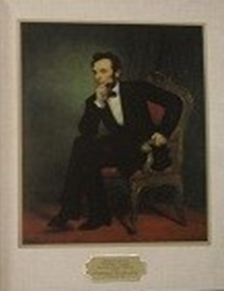


Walkers Cay, Bahamas Past History | |||
| |||
Type of Activity | Communications Support Trips | ||
Location | |||
Location | Bahama Islands | ||
Date of Activity | Various | ||
Coordinates | 27°15′27.8″N 78°23′40.7″W | ||

 |
| Walkers Cay Club, Bahamas (note radio antenna), WHCA maintained UHF system |
I thought Walkers Cay was a true "Paradise" and only a short 90 minutes by helicopter to be in a different world. The Key Biscayne Detachment of WHCA was responsible for maintaining the radio system that connected the Florida White House to Walkers Cay and Grand Cay providing communications whenever President Nixon vacationed at this private retreat on Grand Cay. Robert Abplanalp was a close friend of President Nixon, and owned both Walkers Cay Club, and Grand Cay.
The Walkers Cay Club, and Marina was a popular fishing resort, particularly known as a location for billfishing, with huge Atlantic blue marlin caught in the area; angling for bonefish was also popular there. Walker's Cay was also known for its annual billfish tournaments that were held there, Walkers Cay Billfish Tournaments attracted some of the best anglers in the world, During Abplanalp's ownership, Walker's Cay became a world-renowned destination for sport fishing and marine conservation.
It was a very exclusive resort as the only way to reach the island was either by boat or by air. Walker's Cay Club had a 75-slip fully equipped marina complete with bait, tackle, and snack shop supplying guests with anything they needed. The island's hotel, marina, and airstrip were all upgraded.
The island's airstrip is suitable only for light aircraft. The resort had regularly scheduled flights from Ft Lauderdale, Fl. by Grumman Mallard Sea Plane. Travel by WHCA to the island was generally by helicopter.
 | ||
Guests would arrive on a Grumman Mallard Sea Plane
|

 |
| Walkers Cay Marina (1973) |
 |
| A Guest villa at The Walkers Cay Club |
 |
| The Sea Lion docked at the Marina in 1973 |
 |
| The Islands Chapel in 1973 |

 |
| The hotel’s outside bar and pool area (1973) |
 |
| The hotels fresh and salt water pool area adjacent to the hotels outside bar |
 |
| The Radio Tower viewed from offshore from Walkers Cay (1973) |
 |
UHF Radio system from GBI to Walkers Cay to Grand Cay |
 |
| The GRC-103 UHF Radio system used from GBI to Walkers Cay and Grand Cay Islands |
 |
| Ariel view of Grand Cay (1973) |
We honestly did do some work during some of these trips. I never had any problem finding volunteers to help me on maintenance trips.
Most of the maintenance was accelerated due to salt air corrosion and many of the non-maintenance folks enjoyed being able to help with the grunt labor part of changing out and upgrading various systems.
4 May 1973 on Walkers Cay to support the President’s visit to Grand Cay
All of the WHCA support personnel would stay on Walkers Cay during the Presidential Trips except for one radio tech that would go to Grand Cay and one radio tech would stay at GBI. Although I visited Walkers over 20 times to perform maintenance on the radio equipment and Switchboard, I only participated in this one actual visit at Walkers Cay. I was the only Radioman at Walkers so I was assigned a pager and and hung out at the hotel waiting for some thing to stop working.
During every Presidential visit to Grand Cay, WHCA, the White House staff and the White House Press Corp would stay on Walker’s Cay. Helen Thomas, the Dean of the White House Press Corp who was in that position for what seemed like forever. During the Nixon years, she would have already been a woman in her late 40's or early 50's. On the trips to the Bahamas, she would lead the Press Pool and stay in the hotel on Walkers Cay, some 7 miles from Grand Cay where President Nixon, Robert Abplanalp, and Bebe Rebozo would relax on the beach.
The WHCA Commcenter would actually file her stories and transmit them back to the Press Center, but her access to actual news was limited to whatever the Military Aide would feed her.
Now, the ugly! Helen Thomas routinely relaxed beside the pool at the Walkers Cay Hotel. This woman should NEVER have been a candidate for a two-piece bathing suit at any age! The image was enough to permanently burn the retina of your eyes! All that being said, she did keep the other correspondents in check and establish some rules of engagement, although she could be as rough as any of them, especially during Watergate.
WHCA personnel were given instructions on the route between the various coral rocks to make the 7 mile trip to Grand Cay via a small 13 ft Boston Whaler. For two to three of us to head out on a maintenance trip was very common, but for the Commcenter, they would go solo during TTY message delivery during visits. It was a major short coming because the Commcenter was located at Walkers Cay, and the President located across open water about 7 miles and sometime as much as 45 minutes away on Grand Cay.
When the President departed, we boarded an USAF helicopter and headed back to Crandon Park on Key Biscayne with stops at Grand Cay, and GBI where we picked up other WHCA personnel.
I still think the undertaking of installing permanent Communications to support both Walkers Cay and Grand Cay in the Bahamas was one of the most challenging efforts of WHCA over the years. It was a very elaborate set up and at the same time a Rube Goldberg design.
 |
| Note: Walkers Cay Club was severely damaged in 2004 by two hurricanes |
 |
| Walkers Cay Island in the Bahamas |

 |
Walkers Cay Club after 2004 hurricane season |
 |
| Walkers Cay current Logo (2023) |
 |
Marina Entrance (2023 pictured Don and Becky Cammel) |
 |
| Walkers Cay (2023) |
 |
The restored Marina at Walkers Cay Island in the Bahamas (2023) |
 |
| The Chapel on Walkers Cay under construction (2022) |
 |
| The Chapel on Walkers Cay under construction (2022) |
 |
| Walkers Cay’s restored chapel (2023) |
 | ||||||||||||||||||||||||||||||||||||||||||||||||||||||||||||||||||
| Walkers Cay’s restored chapel (2023) Today, there are only a few structures that have been completed. The new chapel is beautiful, and the “Welcome House” for Customs is a very nice looking building just off the runway. A new resort is scheduled to open in 2023 or 2024 and Allen has hired a team of local residents to work on all of these projects thus creating jobs and economic opportunities for the people of Walker's Cay. He is working with local residents to develop a sustainable fishing industry and to create new tourism attractions. Allen is also investing in education and training programs for local residents. Carl Allen's dedication to Walker's Cay has borne fruit. The island is once again becoming a destination of choice for travelers seeking adventure, relaxation, and natural beauty. It's a testament to what can be achieved through a combination of entrepreneurship, conservation, and a deep respect for the environment. Walker's Cay will not only be a thriving resort but also an eco-friendly destination that upholds responsible tourism. Its restoration serves as a model for sustainable tourism. The island will be powered by renewable energy, and all wastewater will be treated on-site. Allen is also working to restore the island's natural ecosystems, including its mangroves and seagrass beds. The restoration of Walker's Cay, led by Carl Allen, is a remarkable story of vision, dedication, and environmental stewardship. It demonstrates that even the most challenging restoration projects can succeed with the right mix of passion and commitment. Today, Walker's Cay stands as a testament to the enduring beauty of the Bahamas and the resilience of nature, welcoming visitors from around the world to experience its rejuvenated splendor. I would like to thank CWO Don Cammel, US Army Ret. for his narrative and photos that I used in this article about Walkers Cay as it is today.
Bahamas Big Grand Cay President Nixon stayed on Big Grand Cay (aka Grand Cay), Mr. Abplanalp's private 125-acre island in the Bahamas, complete with a house that Mr. Abplanalp had refurbished for the Presidents use, and for relaxation a 55-foot yacht the Sea Lion was always available for their use. President Nixon would cruise the waters in the Sea Lion a sportfishing boat that was sculpted by the talented, skilled, and prideful builders who worked for Whiticar Boatworks under the direction of the late master builder Curt Whiticar. When it first splashed in 1963, it bore the classic lines of a Whiticar — elegant, sleek, and unmistakable. The Sea Lion was built of wood originally and designed to handle the sharp choppy seas off Florida and the Bahamas as it pursued sailfish, blue marlin, mahi mahi, tuna and wahoo. Inventor and engineer Robert Abplanalp of New Jersey owned the Sea Lion for many years and owned the island of Walker's Cay in the Bahamas as well as Grand Cay.President Nixon always stayed on Grand Cay.
The "Big House on Grand Cay is a 4 bedroom and 5 bathroom vacation home with saltwater swimming pool, expansive decks overlooking tropical beaches, a deep water dock, Besides the Main House there was also two guest ocean villas. The lead USSS agent, Military Aide and President’s Doctor stayed in one villa, and if David and Julie Eisenhower or Ed and Trisha Cox came out, they would stay in the other villa on the beach, the caretaker’s quarters, sea plane ramp, helicopter landing pad, and various other storage and utility structures. The main feature was the setting of being on a beautiful, isolated island with a great beach. It was rare for the First Lady to accompany the President, it was normally President Nixon, Bebe Rebozo, and Bob Abplanalp in the Main House.
There was a small house by the boat dock for the caretaker and a small bunk house for necessary support personnel during the trip. The USSS CP and WHCA radio room was in the same building near the front entrance of the main residence.
The bunk house was two small to house everyone, so the Secret Service would stay on Grand Bahama Island (GBI) near Freeport, and they would be choppered in to change shifts. Golf carts were the normal mode of transportation. The Air Force at Homestead AFB provided an 11-man Civil Engineering Presidential support team, and it was responsible for the Ground Power Production on all trips the President made to Grand Cay. The team supported The White House Communications Agency (WHCA) and the United States Secret Service (USSS) with backup ground power on the island. The advance team usually had 2 ground power and 2 EOD men and 3 Firemen to setup and man the helicopter pad as well as 4 Secret Service men for a total of 11 . This support team were always the first on the island. WHCA usually followed bringing the radio equipment, and the shifts of Secret Service agents would be choppered back and forth from Grand Bahama Island (GBI).
The logistics to support this effort relied on helicopter support from Homestead AFB, and the US Coast Guard to bring large items aboard barges or other watercraft. The USSS always wanted to "gold plate" everything and their Grand Cay observation post near the beautiful beach was a small 14-foot Camper style trailer with a long table down the wall, and signs on the door NOT to use the toilet. Of course someone would always use it, and then the task of emptying it after a visit. The USSS decided to upgrade, and they purchased a larger trailer, maybe 18 feet. They took this to Opa-Locka, and the fabrication shop installed an extended "Bay Window" that protruded about 18-24 inches out from the normal wall. This was to allow for a better field of vision from inside this beach Command Post. We installed the appropriate radio base stations, and had a terminal to connect phone lines from Grand Cay to the small hotel style switchboard at Walkers Cay. We tested everything, the USSS signed off that it was exactly what they needed. Next step was to remove all the electronic equipment, furniture, and any weight we could remove so this trailer could be placed in a sling under a Helicopter. The USCG delivered the trailer to Grand Bahama Island, and the chopper was needed for the last 40 miles. Everyone at GBI watched as the chopper took off, we boarded a Huey to fly in formation to Grand Cay. About 5 minutes into the flight, we saw the door fly open and break off the trailer. Soon after, the new "Bay Window" broke loose and dropped in the drink. That allowed the side to start caving in, and within another 10 miles, the only thing left was the axle hanging in the sling. The pilot headed out to the deep ocean and dropped the load. Cost of the trailer, the fabrication, purchasing in DC and driving to Florida, meetings, and all the effort must have cost a fortune! The USSS, WHCA, and the USAF all had a big argument on the budget for this fiasco. I cannot tell you what the outcome was of these discussions. The trip to Grand Cay was about a 25min. boat ride southeast of Walkers Cay, however in bad weather it was not safe to travel the 7 miles back to Walkers Cay. One such incident, where the weather conditions were actually bad. I found myself on Grand Cay with a Commcenter tech and we requested to be picked up. We waited quite some time and thought the hotel had forgotten us, but a little later that evening we heard a vessel arriving at the dock. To our surprise they sent the Sea Lion to pick us up and not the 13 ft whaler. We were given instructions on the route between the various coral rocks and 7 mile trip to Grand Cay via a small 13 ft Boston Whaler, 2-3 of us headed out for a maintenance trip was very common, but the Commcenter had to go solo with TTY message delivery during Presidential visits. It was a major short coming because the Commcenter was located at Walkers Cay, and the President located across open water about 7 miles and sometime as much as 45 minutes away. There were plans that we could just call the Military Aide and request a helicopter for URGENT deliveries, but the few times we tested that we were forced to use our dedicated 13 ft Whaler. Whenever the Commcenter was summoned by the Military Aid during a visit to come pick up an outgoing message from the President, Dr. Kissinger, or any other Senior Staff member. Once a message was received the WHCA Comm Center tech had to take the boat ride to Grand Cay Because of rough water, it took them over 50 minutes to arrive. They went into the living room of the "Big House" as we call it, and here were the President, Mr Abplanalp, Bebe Rebozo, and Dr. Kissinger sitting around a pool table all in swimming suits, and probably feeling no pain, had a lot of top shelf alcohol available. They were given a 7 pages of yellow legal pad written with a sharpie, arrows and paragraph numbers, and corrections, and then a couple additional pages from other documents. It took another 50 minutes to return to Walkers Cay, and then we had to type the message for transmission to Key Biscayne who would resend to the Situation Room. From the original call until this message cleared Walkers Cay was close to 4 hours total, it was a very long message, and important, going to General Westmoreland. When the WH Situation Room received the message, they didn't have any warning, and need to verify with the Military Aide that it was real. The Military Aid and the President were out on the beach at Grand Cay, and took another 30 minutes to get them connected. wait and see if there was a response and then return to Walkers Cay, type the message on tape, send to Key Biscayne, and then they relayed it to the White House, who then made distribution and sent it worldwide via the AUTODIN network. Author to recipient times when you add the boat trip, typing times, and relay times were awfully slow. On Monday morning, they wanted to "hang the messenger" rather that address the real reason for the delay, the message contained immediate bombing instructions which arrived very late to implement on the suggested schedule. Still never did fix the moving of the Commcenter from Walkers Cay to Grand Cay which should have been done from day one, but WHMO had some maximum numbers for support folks on Grand Cay, weather, fire crew, Navy divers, and WHCA. When President Nixon would travel to Grand Cay, WHCA frequently transmitted messages to all levels of the Staff. The President issued the order for the Tet Offensive effort in Viet Nam while at Grand Cay in the Bahamas. There were also many messages giving guidance for Watergate issues, once again, all on Post-It notes attached to a TTY message reply with the simple initials "RN" somewhere on the page. The Commcenter would sometimes have to transmit long TTY messages multiple times, and then piece together to get all the garble out. Nothing worse than having the last page have a few characters missing! At 100 wpm, a very slow process. I can remember also when it was 60 wpm. The President was actually staying on the island the day of the Watergate break-in, but there had been no communication until the President called upon his return to his Key Biscayne home on Sunday morning June 18,1972, and even then, they did not discuss the breaking news of the weekend. (Watergate break-in was Saturday, June 17) The Attorney General John Mitchell eventually went to jail, once it was discovered he was one of the ring leaders of the entire operation. Today, I am not sure with cellphones, emails, instant messages how Watergate would have unfolded. Seeing lots of messages in the Commcenter, and the 3M Post-It notes that were attached and sent back are very difficult to track once the reader pulls the Post-It off the document. In 1973 we expanded the radio system I remember building and installing a new system between Walkers Cay and Grand Cay. The final leg of the was a GRC 103 UHF radio system, with a TD 660 multiplexer providing 24 voice circuits between Walkers Cay and terminating on Grand Cay. Telephones were installed in the Main residence and both villas, as well as the bunkhouse on the island. The Secret Service CP/WHCA radio room also had phones installed and FM Radio Consoles on Baker and Charlie frequencies.
26 May 73 to Grand Cay to support President Nixon during Visit The President was visiting his close friend Bob Abplanalp on Grand Cay. I was assigned as the only radioman on the island during the President’s visit. It was also during a midnight shift change of Secret Service Agents when Army One crashed in the ocean while landing There were fifteen survivors, agents, and crew, they were all on the underside of the chopper which had flipped over when it crashed tragically one Secret Service Agent drowned.
This was the last time I was on Grand Cay! I still think the undertaking of installing permanent Communications to support Grand Cay in the Bahamas was one of the most challenging efforts of WHCA over the years. It was a very elaborate set up and at the same time a Rube Goldberg design. President Nixon made many visits to Grand Cay between 1969 and 1974 when he resigned from office, After his resignation all of the Communications equipment was removed from GBI, Walkers Cay and Grand Cay. The Renovated Grand Cay After the death of Robert Abplanalp in 2003, the fortunes of Grand Cay took a further turn for the worse when it was hit by two hurricanes in 2004, (Frances and Jeanne), which caused extensive damage. The Big House, CP/radio room, bunk house and both of the villas survived because they were all concrete structures. The boat dock and care takers house suffered moderate damage. However, in 2005, the Abplanalp family decided to sell the island, marking the end of a 50 year era. In 2015 the island was purchased by coal magnet Chris Cline from Illinois who was the largest producer of coal in the US, with mines in both Illinois and West Virginia had a vision to turn Grand Cay into a private retreat for his family and friends. Cline died in a crash with six others while taking off from the island under an emergency medical situation for a family member via helicopter around 2019. During the evacuation, the helicopter crashed very near the previous site where the Presidential Helicopter Army One crashed in 1973, again under the hours of darkness and it was not discovered for a couple days, no one checked to see if it had reached their destination for 24 hours. The most recent owner of the island is a Soccer Team owner who has already greatly expanded the island. and uses it as a reward to provide a place for his soccer team players to come after tournaments. Today Grand Cay is beyond recognition from what it was in the 70’s. The Island now features seven houses, including a 1950’s coral stone home, contemporary-style villas, staff homes and a dormitory-style building for workers that can accommodate dozens of guests as well as a large professional kitchen, also a feature swimming pool, two marinas, a gym, tennis, pickleball and basketball courts. For transportation, there is a fleet of dune buggies and golf carts are available.
All of the construction force used to renovate the island is made up of the local labor pool of Bahamian natives from nearby Little Grand Cay. The “Big House” survived the hurricanes and remains on the hill, and it remains intact, the house has been remodeled, but the outside still looks run down, with outside mildew, and bad need of repairs to the steps and path leading to the main entrance. The 1970’s paneling in the game room has all been replaced, and the pool off the patio has been restored.
The old two hexagonal homes where the USSS and Military Aides stayed are still there and they have built additional cabins.
The old Radio Room/USSS CP building has been given a metal roof and an extreme makeover. The radio room is now an office and laundry room, The concrete pad for the GRC-103 antenna is still on the side of the building, but expanded to a larger pad to accommodate trash cans on the outside of the building.
The caretakers home is gone, and an upscale floating dock has been installed in its place. I don’t think anything on Grand Cay is designed to be revenue generating, only there to give the soccer teams a place for R&R in off season and between tournaments. There are “First Class” accommodations built for the support staff.
The large Recreation Hall is equipped with shuffleboard, roulette wheel, poker tables, pool tables, ping pong, a very large bar, outdoor waterfall jacuzzi overlooking boat dock, tennis courts, basketball court, and pickleball court. Outside grills, and hammocks are plentiful. Great hotel like rooms, four to a room for lower level workers, then some two person rooms, and four larger single rooms for supervisors. There was a first class Mess Hall style kitchen to serve 80 people. and don’t forget the pool and gym, as well as the tennis, pickleball and basketball courts.
I would like to thank CWO Donald Cammel, US Army Ret. for his narrative and photos that I used in this article about Grand Cay as it is today. | ||||||||||||||||||||||||||||||||||||||||||||||||||||||||||||||||||


.jpg)


.jpg)
.jpg)
.jpg)


Operation Homecoming | |
 | |
Type of Activity | Return of our POW’s from Vietnam |
Location | |
Location | Clark AFB PI |
Date of Activity | 12 February 1973 |
Coordinates | 15°11'31.16"N 120°33'33.95"E |
This was not a pleasant time for anyone remaining in the Military and the POW’s that first returned were not welcomed home by all Americans, it would take many months before our nation forgot this controversial conflict.
 |
| America’s POWs are finally on there way home! |
 |
| Inside the C-141A, later known as the "Hanoi Taxi" |
 |
| The first of the POWs arrive at Clark AFB, PI. |
 |
| POWs return home |
 |
| Dr Henry Kissinger chief negotiator in the Paris Peace talks |
 |
| President Nixon welcomes John McCain upon his return from Vietnam |
Grand Cay, Bahamas | |||
| |||
Type of Activity | Communications Support Trip | ||
Location | |||
Location | |||
Date of Activity | 26 May 1973 | ||
Coordinates | 27°15′27.8″N 78°23′40.7″W | ||

26 May 73 to Grand Cay Bahamas to support President Nixon during Visit
The President was visiting his close friend Bob Abplanalp on Grand Cay. I remember the night from hell on Grand Cay very well, I was there when the Mayday call came in. When the midnight shift of USSS agents came in for a landing the blades hooked the water and 16 agents plus the chopper crew hit the water and started to sink. I was asleep when the Mayday call came in. I grabbed a radio and headed for the chopper pad without a flashlight God was it dark, but I could hear the agents yelling. The 15 survivors, agents and crew, were all on the underside of the chopper which had flipped over when it crashed. About the time that I got to the pad Bob Abplanalp arrived on a golf cart which had headlights so we could see the chopper. I called the CP to let them know where the chopper was located and that everyone was still on the chopper and that it was partially submerged. . Maybe five min. after that the boat arrived with the divers and started evacuating the agents. Luckily there were divers on the trip and they finally got to the chopper to start evacuating everyone.
Others arrived and I then went back to the radio room to make sure all the radios were working. I called Walkers Cay to let someone know over there what had happened, I then went to the bunk house where they were bringing everyone any necessary medical treatment, The Presidents personal physician was checking everyone involved in the crash. I found out that an agent was trapped inside the chopper and drowned. Agent J. Clifford Dietrich - May 26, 1973 was killed in this helicopter crash near Grand Cay Island in the Bahamas while on assignment with the Presidential Protective Division. I then returned to the USSS CP to see if the agent on duty needed anything. I was asked to help place Agent Dietrich’s body on a Chinook that had arrived to transport everyone back to GBI and then back to Homestead. They placed him under the jump seats of the chopper and none of the agents that flew back ever knew they were sitting over him. This was one night that I will never forget. That was the last time I ever saw the Army One crew and I think that they were deactivated in 1976, in part because of this crash. In LTC Boyer’s book “Inside the Presidential Helicopter” he disclosed that the altimeter was not properly calibrated and was off by 300 ft. this along with inadequate lighting contributed to the crash.
 |
Army helicopter crashes near Grand Cay Bahamas, lay overturned in water |
KEY BISCAYNE, Fla., May 27 (UPI)—President Nixon ordered today an investigation to determine what forced an Army helicopter to plummet into the Atlantic last night while taking seven. Secret Service agents to guard him and his family, on a Bahama island. One agent died and nine .men suffered minor injuries.
The twin-engine helicopter went down shortly after 10 P.M. (E.D.T.) about a mile south of Grand Cay, the island owned by Mr. Nixon's close friend, Robert H. Abplanalp, a New York multimillionaire.
The aircraft, which was ferrying the Secret Service agents from Florida for their overnight shift, was approaching a landing pad when it went into the water. Gerald L. Warren, deputy White House press secretary, said the dead agent's body was recovered by divers at the scene of the crash. He was identified by the White House as Joseph C. Dietrich, 25 years old, of Woodbridge, Va., married and the father of two children. He had been an agent for "three or four years," Mr. Warren said.
Mr. Nixon, immediately notified of the crash, "expressed deep sadness and sympathy for the family of agent Dietrich," Mr. Warren said. "He has ordered all necessary steps be taken to investigate the cause of the accident and directed the Department of Defense to appoint an investigative board." An Air Force plane flew Mr. Dietrich's body from Homestead Air Force Base in Florida to Greenwich, Conn., where funeral services will be held. Mrs. Dietrich flew in from Washington to accompany his body.
The agent had lived in Greenwich most of his life before joining the White House protective detail two months ago.
The six other agents and three crew members were "slightly injured" and were taken to a hospital at Homestead Air Force Base, Mr. Warren said. The President and his family flew back to their bayside villa here this afternoon aboard a similar Army helicopter.
The survivors had been assisted from the overturned helicopter by the pilot, Chief Warrant Officer Ronald C. Bean, 37 years old, of Dale City, Va.
The agents were able to climb on top of the chopper and to await rescue aboard small boats dispatched from Grand Cay, where they were heard shouting for help.
The chief White House photographer, Ollie Atkins, was standing on the landing pad awaiting the arrival of the helicopter when he heard the splashdown and the engines cut off.
"It was as dark as a cow's belly," Mr. Atkins 'told reporters after he radioed to the security communications base at Walker Cay, six miles away for help.
The VH3A helicopter is one of three used to transport the President and his family, and Mr. Nixon had frequently flown in it.
"I heard a swishing noise like water being poured on hot cement and then the motor stopped," said Mr. Atkins, adding that for the next few moments "I stood there helpless listening to all these guys . . yelling for help."
Rescuers got to the craft about 15 minutes later as the Helicopter that crashed Saturday near Grand Cay, Bahamas, lay overturned in water survivors, coughing from fumes and oil-soaked water, waited on top of it. The survivors were given a preliminary examination on Grand Cay, and then flown by helicopter to the Homestead base for treatment of shock and slight burns from the fuel oil. All were released this morning. Three Navy frogmen—on' alert whenever the President is near water assisted in the rescue.
The surviving agents were identified as: Charles W. Rochner, 31 years old; Michael E. Cleary, 26; William H. Brawley, 34; Stephen J. Petro, 30; Robert R. Stewart Jr., 26, and James Reiter, 30.
The other crewmen were copilot Frederick W. Evans, 33, and Sgt. William R. Robinson, 32, both of Fort Belvoir, Va.
Two rubber rafts, one from the nearby Coast Guard cutter Cape Knox and another deployed from the downed chopper by the pilot, were used in the rescue along with a runabout brought from Grand Cay by Secret Service agents.
A barge was summoned from the Grand Bahama Island to assist in the salvage of the chopper, which remained afloat.
 | |||||||||||||||||||||||||||||||||||||||||||||||||||||||||||||||||||||||||||||||||||||||||||||


.jpg)


.jpg)


.jpg)


.jpg)

DOD IG Audit of WHCA | |
 | |
Type Of Activity | DOD IG Audit |
Location | |
Location | Washington DC |
Date of Activity | Dec 1995 |
Coordinates | |
Over the decades, WHCA’s mission has grown significantly. What began as a low-profile communications unit now encompasses a wide range of services supporting the president, vice president, National Security Council, First Family, and White House staff. This includes setting up secure communications, videotaping key presidential moments for the National Archives, providing stenographic services for press briefings, and managing logistics for presidential appearances.
By 1978, WHCA had reached a peak staffing level of over 1,000 personnel. Although downsizing efforts reduced the agency to about 850 members, it remains the largest organization under the White House Military Office (WHMO), with a budget exceeding $120 million during the Clinton administration. Despite this, WHCA operated largely under the radar, with minimal oversight from both the Department of Defense (DoD) and White House leadership.
Scandals, Oversight, and “The Coffees”
In the 1990s, WHCA faced increased scrutiny due to its involvement in videotaping Democratic National Committee (DNC) fundraisers and informal White House coffees. This controversy erupted after WHCA, following Senate inquiries into campaign finance practices, delayed the release of video footage, sparking accusations of obstruction. The tapes documented President Bill Clinton’s interactions with major donors, raising questions about WHCA’s role in preserving politically sensitive moments.
Critics argued that WHCA’s presence at these events blurred the line between its communications mission and political activities. Some speculated that WHCA’s expanded duties were a byproduct of bureaucratic mission creep, with the agency taking on additional roles to justify its budget and staffing levels. Others noted that Clinton may have become so accustomed to constant video documentation that he failed to question WHCA’s ubiquitous presence.
Former White House Deputy Chief of Staff Harold Ickes acknowledged the ambiguity surrounding WHCA’s activities, admitting in congressional testimony that White House staff rarely noticed the agency’s video crews. He also described WHCA as part of the White House Military Office, a unit with a long history of classified projects, including the construction of presidential bomb shelters and secret taping systems used by past presidents.
A History of Secret Funds and Loose Oversight
WHCA’s overseer, the White House Military Office, controlled a secret fund during the Eisenhower, Kennedy, Johnson, and Nixon administrations. This fund, purportedly for security-related expenses, was sometimes used for questionable projects, including renovations to presidential properties and the installation of President Lyndon B. Johnson’s and President Richard Nixon’s secret recording system. WHCA personnel were often assigned to these classified tasks, highlighting the agency’s role as a tool for executive discretion.
Following revelations about this secret fund in the 1980 book Breaking Cover by former WHMO Director Bill Gulley, the Reagan administration promised reforms, but questions about WHCA’s management persisted. In the 1990s, congressional inquiries and audits by the DoD’s Inspector General revealed issues such as unaccounted property, excessive equipment leases, and mission overreach.
A History of Secret Funds and Loose Oversight
WHCA’s overseer, the White House Military Office, controlled a secret fund during the Eisenhower, Kennedy, Johnson, and Nixon administrations. This fund, purportedly for security-related expenses, was sometimes used for questionable projects, including renovations to presidential properties and the installation of President Lyndon B. Johnson’s secret recording system. WHCA personnel were often assigned to these classified tasks, highlighting the agency’s role as a tool for executive discretion.
Following revelations about this secret fund in the 1980 book Breaking Cover by former WHMO Director Bill Gulley, the Reagan administration promised reforms, but questions about WHCA’s management persisted. In the 1990s, congressional inquiries and audits by the DoD’s Inspector General revealed issues such as unaccounted property, excessive equipment leases, and mission overreach.
Despite WHCA’s considerable size, WHCA has operated with little attention from either its Defense Department or White House masters. The agency’s basic tasks have been reviewed only three times since its inception, and it escaped formal audit until a DOD IG audit was completed in November 1995.
The initial attempts to conduct oversight of this 900-person, $100 million-a-year White House-directed agency were made by Congress in 1994. Those attempts were met with repeated delays and White House stonewalling. Early 1995, after meetings with the White House Counsel's office, GAO, and the Department of Defense IG's office, Congress finally received the approval to have an IG's investigation done going back 5 years.
WHCA was annually performing $7.8 million worth of tasks beyond the scope of its mission; it was unable to account for more than half a million dollars’ worth of agency property; and it was paying close to $800,000 to lease superfluous equipment.
This report on phase one of the audit cited “no evidence of significant theft or significant waste” in WHCA, but noted several areas in need of “management attention.”
Finally, the DODIG concluded that WHCA is providing the White House with services and equipment which are outside way, outside of the scope of its mission of telecommunications support to the President of the United States.
Congressional Inquiry and the Road Ahead
Despite these findings, WHCA’s operations remain shrouded in secrecy due to their classification as matters of “presidential protection.” Efforts by the Government Accountability Office (GAO) to investigate WHCA were blocked by the White House, which cited national security concerns. Congressional Republicans pushed for further hearings resulting with Congressional hearings conducted on May 16 and June 13, 1996.
While WHCA continues to support the president with essential communications services, its evolving mission, political entanglements, and history of minimal oversight raise ongoing questions about transparency, accountability, and the proper scope of its activities.
The April 1996 phase-two report concluded that WHCA was receiving “little or no oversight of budgeting, acquisition planning, and organizational effectiveness,” and recommended that the DoD’s oversight role be strengthened.
WHCA has been a deep, dark hole over at the White House into which there has been spending nearly $100 million annually without any executive branch oversight. It has also become a pot of money devoted to many things-kind of a miscellaneous pot of money-that have nothing to do with telecommunications or the President.
The White House Communications Agency has had a totally unique mission, and the staff who serves there perform their duties exceptionally well and have done so for more than 50 years and for 11 Presidents, both Democrats and Republicans.
Among these:
The DOD IG’s report concluded that WHCA's budgets have gone largely unreviewed. Its annual performance plan has failed to meet DOD standards. Its acquisition planning has violated DOD regulations and resulted in wasteful purchases.
Finally, the DOD IG concluded that WHCA is providing the White House with services and equipment which are outside way, outside of the scope of its mission of telecommunications support to the President of the United States.
The executive summary is copied below with complete report available at Audit Report on White House Communications Agency. (Report No. 96-033) and Audit Report on White House Communications Agency Phase II. (Report No. 96-100)
Transcript of Congressional hearings conducted on May 16 and June 13, 1996 Oversight of theWhite House Communications Agency
November 29, 1995
MEMORANDUM FOR DIRECTOR, WHITE HOUSE MILITARY OFFICE
UNDER SECRETARY OF DEFENSE (COMPTROLLER)
ASSISTANT SECRETARY OF DEFENSE (COMMAND,CONTROL, COMMUNICATIONS AND INTELLIGENCE)
DIRECTOR, DEFENSE INFORMATION SYSTEMS AGENCY
COMMANDER, WHITE HOUSE COMMUNICATIONS AGENCY
SUBJECT: Audit Report on White House Communications Agency
(Report No. 96-033)
We are providing this report for review and comment. We performed the audit in response to a request from Congress and the Deputy Secretary of Defense. We considered management comments on a draft of this report in preparing the final report.
The recommendations in Findings A and B relate to a reallocation of funding between parts of the DoD budget and the budget for the Executive Office of the President. Finding A questions the appropriateness of DoD, through the White House Communications Agency, funding audiovisual, stenographic and news wire services and photographic equipment for the White House. Finding B covers the provision of .White House Communications Agency support and equipment to the Secret Service. Although the Secret Service is required by law to reimburse an agency providing the support, the Secret Service has not done so. Several DoD appropriations and Secret Service appropriations would be affected by the recommendations. Thus, we suggest early consultation with the Office of Management and Budget and the Under Secretary of Defense (Comptroller) so those changes, if agreed to, could be implemented in the President's FY 1997 budget.
DoD Directive 7650.3 requires that all recommendations be resolved promptly. Management comments were responsive to all recommendations except the recommendation to specify services to be provided by the White House Communications Agency and to transfer funding, managing, contracting, and purchasing of audiovisual, news wire, and stenographic services and camera equipment to the Executive Office of the President. We request that the Assistant Secretary of Defense (Command, Control, Communications and Intelligence) reconsider his position and provide additional comments by January 12, 1996.
We have not completed our audit of all aspects of White House Communications Agency activities. We started work on the final phase of the audit and expect to provide a draft report in early 1996. The issues we plan to review during the final phase include the organization and staffing of the White House Communications Agency, acquisition planning, management of telecommunications equipment and services, and controls over selected financial activities.
Office of the Inspector General, DoD
November 29, 1995
Report No. 96-033
(project No. 5RD-5027)
White House Communications Agency
Executive Summary
Introduction. The Chairman, House Committee on Government Reform and Oversight; the Chairman, House Subcommittee on National Security, International Affairs, and Criminal Justice, Committee on Government Reform and Oversight; and the Deputy Secretary of Defense requested the audit. The Deputy Secretary of Defense emphasized that this review should be as thorough as possible of all White House Communications Agency (WHCA) activities in the last 5 years.
Audit Objectives. The audit objective was to review all activities at the WHCA, the authorities and management controls under which the activities are conducted, and various nonspecific allegations of mismanagement and waste. The adequacy of the management control program will be discussed in a subsequent report.
Audit Results. We found no evidence of theft or significant waste of resources in this phase of the audit. However, the following areas need management attention.
o During FY 1995, WHCA and DoD funded about $7.8 million for services and equipment that are not within the scope of the WHCA telecommunications mission as presently defined and should be funded by the Executive Office of the President (Finding A).
o WHCA was not reimbursed for permanent support to the Secret Service, as required by law, and understated support costs reported to Congress by $3.2 million. The Secret Service did not reimburse about $4.3 million for support and, because DoD absorbed support costs, the. The Secret Service budget was augmented by that amount. WHCA is expected to provide permanent support valued at $7.0 million during FYs 1996 through FY 2001 for which DoD should be reimbursed by the Secret Service (Finding B)..
o WHCA managers did not maintain control over repair parts inventories, and contracting officer's representatives did not document maintenance data. Therefore, WHCA can neither ensure the adequacy or accountability of repair parts inventories nor determine the cost-effectiveness of maintenance contracts (Finding C).
o WHCA lacked accountability for nonexpendable property on hand and had excess expendable supplies valued at about $226,000. Property valued at about $577,000 was not accounted for and is at risk for potential waste or loss. Further, by reducing the requisition objective for expendable items and by eliminating excess expendable items with no demand histories, $226,000 could be put to better use during FY 1996 (Finding D).
o The inventory of base communications equipment and services is neither complete nor accurate. Consequently, the inventory could not be audited, and WHCA could neither review and revalidate communications requirements nor assess the cost effectiveness of configurations for equipment and services. Further, WHCA is at risk of paying for unneeded equipment and services (Finding E).
o WHCA paid for leased, long-haul telecommunications circuits and equipment that were no longer required. If the circuits are terminated, about $759,000 can be put to better use during FYs 1996 through 2001 (Finding F).
o WHCA did not validate bills for long-haul telecommunications equipment and services before verifying that the bills were accurate. As a result, WHCA had no assurance that payments ceased for terminated services or that payments would not be initiated for services ordered but not installed. If effective procedures are implemented, about $294,000 could be put to better use during FYs 1996 through 2001(Finding G).
Summary of Recommendations. We recommend that management take the following corrective actions.
o Specify the services. that WHCA is to provide to the Executive Office of the President. Transfer responsibility for funding, managing, contracting, and purchasing of audiovisual, news wire, and stenographic services and camera equipment to the Executive Office of the President.
o Specify the permanent and temporary support provided to the Secret Service and determine which is reimbursable or non-reimbursable, specify billing procedures, and bill the Secret Service for reimbursable support provided during FY 1995 and continue to bill for all future reimbursable support.
o Fully implement the existing maintenance management system, turn in excess. repair parts, update lists of equipment under maintenance contracts, and use vendor service reports to assess the cost-effectiveness of maintenance contracts.
o Record identified property in the property book, establish the control point for receiving all property, perform monthly reconciliations of the document register, annually review requisition objectives, and turn in excess property.
o Establish a complete and accurate inventory of short-haul equipment and services, and maintain required inventory records.
o Initiate action to terminate unneeded long-haul circuits and equipment, establish the required review and revalidation program for equipment and services and establish a complete inventory of equipment and services.
o Establish procedures to verify the accuracy of Customer Cost and Obligation Reports on a monthly basis.
Management Comments. The Assistant Secretary of Defense (Command, Control, Communications and Intelligence) submitted joint comments for himself; the Director, DISA; and the Commander, WHCA. The Assistant Secretary concurred in all recommendations except for the recommendation to specify the services that WHCA is to provide to the White House and to transfer responsibility for funding, managing, contracting, and purchasing of audiovisual, news wire, and stenographic services and camera equipment to the Executive Office of the President. See Part I for a summary of management comments and Part III for the complete text of management comments.
Audit Response. As a result of information from management, we deleted one recommendation (Finding D) regarding property accountability. The Assistant Secretary's comments are not responsive regarding the recommendation related to specifying WHCA services and transferring these responsibilities. We maintain that WHCA should not fund the costs of audiovisual, news wire, and stenographic services and photographic equipment for the White House absent clearer direction to do so. We do not question the President's need for the services, contracts, or equipment provided by WHCA, and we recognize the legal authority of the President to issue an Executive Order to specify the services WHCA is to provide. However, as a DoD organization, WHCA is governed by DoD Directive 4640.13 in providing telecommunications services and the functions now performed and funded by WHCA go beyond telecommunications services as defined in that Directive. We request that the Assistant Secretary of Defense (Command, Control, Communications and Intelligence) reconsider his position and provide additional comments in response to the final report by January 12, 1996.
Oversight of the White House Communications Agency | |
 | |
Type of Activity | IG audit of Communications Support |
Location | |
Location | Washington DC |
Date of Activity | May 16, 1996, June 13 1996 |
Coordinates | 38°53'51.2"N 77°02'20.9"W |

- $577,000 worth of missing equipment will remain unaccounted for.
- $300,000 software packages will be purchased yet sit unopened.
- $294,000 will be paid for services never provided.
- $784,000 in illegal contracts will continue to be let.
- $4.9 million unusable communications trailers will continue to be purchased.
- $2.1 million maintenance contracts will continue to be sole sourced to WHCA friends in total violation of Federal contracting law.
- services quoted at $35,000 will be billed at $91,000, and those bills will be paid.
- $14.5 million in outstanding obligations will remain unvalidated.
DETAILS OF THE DOD IG AUDIT REPORTS
Second Report: Report No. 96-100, April 29, 1996:
OVERALL ASSESSMENT
CONCLUSION
The Nixon Library and Birthplace | |
 | |
Type Of Activity | Nixon Presidential Library |
Location | |
Location | Yorba Linda CA |
Date of Activity | Est, 1990 |
Coordinates | |
The museum is housed in a 52,000-square-foot building in the suburbs of Yorba Linda. Opening its doors in 1990, this complex was established to celebrate former President Nixon's accomplishments as a peacemaker and an international statesman. From the humble farmhouse built by his father in 1912, to priceless gifts from heads of state, to the peaceful memorials of the President and Mrs. Nixon, the museum and its beautifully landscaped grounds and gardens trace the long road from Richard Nixon's past.

The entire facility underwent a $15 million renovation in 2016, and reopened on October 14 2016. The Library now features updated, multimedia museum exhibits; aimed at bringing the country’s 37th president closer to younger generations less familiar with his groundbreaking trip to China or the Watergate scandal. the complex is jointly operated by NARA and the Richard Nixon Foundation.
 |
| Wall mural of former President Richard Nixon in the lobby area of the Richard Nixon Presidential Library and Museum |
President Nixon's Oval Office
In the Nixon Library is a replica of the Oval Office in the White House, where President Nixon made many of his most crucial decisions.
 |
| President Nixon’s Oval Office |

The Space Race gallery connects Nixon to NASA's missions. There's an Apollo 16 space suit reproduction, dehydrated pork and scallops astronaut food, and gift lunar landing cufflinks.
 |
| Apollo 11 display at the Nixon Library and Museum |
 |
| The Moon Walk 1969 |
When Apollo 11 landed on the moon I was in New Delhi India preparing for President Nixon’s arrival on his first world tour since taking office in 1969. Since the Janpath Hotel in New Delhi did not have a radio or TV I had to read about its success in the Newspaper the next day.
A phone used by Nixon to call the Apollo 11 astronauts after they landed on the Moon may be on display (it occasionally goes on tour), along with a contingency speech drafted by speechwriter William Safire in case of a disastrous ending of the mission.
 |
| The phone used by Present Nixon to call the Apollo 11 astronauts |
The President arrived on Guam and spent the night at the residents of Rear Adm. Pugh Residence, Commander of the U.S. Naval Forces, Mariana Islands. While the President was on the mainland we were held in reserve for any Personnel sickness or equipment malfunction, The team spent two weeks there without incident before we returned to San Clemente.
 |
| President Nixon’s arrival in China |
 |
| President Nixon is greeted By Chinese Premier Zhou Enlai |

 |
| Stagecoach the President's Limousine |
Army One

Richard Nixon's Birthplace
Behind the museum is the birthplace, which was constructed by Nixon’s father using a home-building kit and restored to appear as it was in 1910.
President Richard Nixon’s Birthplace

President Nixon’s Birthplace is located in a slightly secluded setting east of the main building, in a grove of trees. It is a 1+1⁄2 story Craftsman-style bungalow, with a gabled roof and clapboarded exterior. The house was built in 1910 on family ranchland; President Nixon was born there the following year. He and his family stayed there until 1922, when they moved to Whittier, California
The front entrance
The Rear on the Birthplace
The piano on which Richard Nixon learned to play.
In the Kitchen as it was in 1910 The Presidents Bedroom


The Nixon Memorial Garden.
The original farmhouse where President Nixon was born is just a few steps away from his final resting place in the Nixon Memorial Garden.
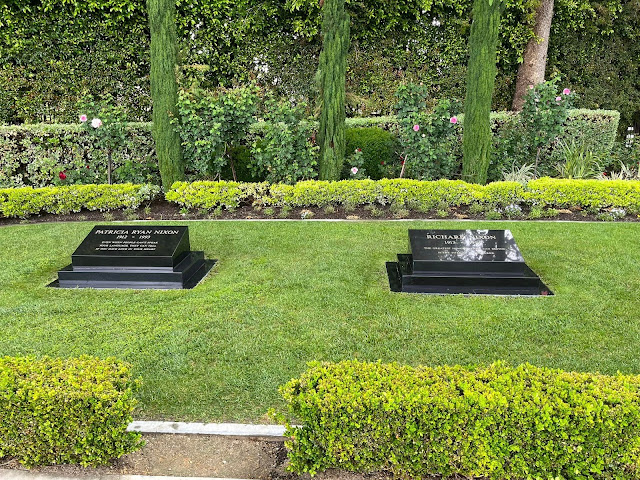
President and Mrs. Nixon are buried on the grounds, just a few feet from his birthplace
 |
| President Richard Nikon’s headstone |
 |
| First Lady Patricia Nixon’s headstone |
In 2023 there was a reunion of past and present members of the White House Communications Agency at the Nixon Presidential Library and Birthplace and these photographs were taken by Marty Williams during a tour.
WHCA Recruitment Video (1992) | |
 | |
| Type of Activity | |
Location | |
| Location | Washington DC |
| Date of Activity | 1992 |
| Coordinates | 38°53′52″N 77°02′11″W |
The Unit was activated under the Military District of Washington to provide normal and emergency communications requirements in support of the President. Initially named the White House Signal Detachment (WHSD) consisting of 32 people provided mobile radio, teletype, telephone, and cryptographic aids in the White House and at the Presidential Retreat Shangri-La, now known as Camp David.
WHSD wasn’t even a real agency for the first three months of its life. Rather, it was an unofficial collection of the U.S. Army whose low-profile mission was to provide secure lines of communication for the president during World War II. Officially activated in March 1942, WHSD has since undergone two name changes and a couple of shifts in oversight. During the Eisenhower administration WHSD was renamed the White House Army Service Agency (WHASA)
In June of 1962, a review of the organizational arrangements by which the Communications needs ln the White House were being met and the review suggested certain changes involving Department of Defense support. It was believed that these changes would facilitate the White House operations. The White House Communications Agency (WHCA), as it has been known since 1962, is a “joint service agency” staffed by all branches of the armed forces, as well as a handful of civilians. Recruiting qualified personnel was always a huge problem, because of the sensitive nature of the assignment WHCA formed recruiting teams and sent them to many bases in the US and overseas,
I reported into Ft. Monmouth and started training as a Microwave Radio Repairman in April 1965. Several weeks before I completed training, I was interviewed by a recruiting team from the White House Communications Agency (WHCA). Normally these teams were comprised of an Trip Officer and three enlisted members knowledgeable of the MOS’s needed by the Agency. After reviewing hundreds of 201 files, a handful of students were selected to be interviewed. I returned the next day and was told that I had been selected.
Passing a polygraph examination was required and your background needed to be squeaky clean and have ZERO deceptions with your answers, you can't get offended or flinch even when they ask you insane questions about your character or lifestyle. I remember the first time through the test I had no deceptions, and the examiner asked the last question “have you told the truth to all of the previous questions”? Well the machine went wild, so after some consultation with the examiner, I re-took the test and passed.
Then an extensive background investigation was conducted, even for those of us who already had security clearances, my WHCA contact told me that only 1 of 3 make it through the screening.
Reportable items included within the Interview , but are not limited to, were as follows:
-Adverse involvement with law enforcement agencies to include arrests, fines, speeding tickets and parking tickets
-Negative Counseling or Uniform Code of Military Justice (UCMJ) punishment
-Security Incidents/Infractions
-Court Summons
-Credit judgments, bankruptcy filings, repossessions, or late payments
-Association with foreign nationals (not previously reported or a change in contact relationship/frequency)
-Foreign Travel (NLT 30 days prior to travel)
-Change in marital status -Legal name change
The background investigation actually took about six months with Investigators interviewing references and traveling to my hometown talking to my neighbors
I was ultimately selected and was transferred to WHCA in Washington DC. It was November of 1965 when my experiences with WHCA began.
When I reported for duty in 1965 WHCA had a total of 450 people assigned. I quickly found out that it was a very unique organization, no uniforms, civilian status, and an assignment that was unlimited in length.
There was a different set of rules for the old timers who were there . They served the President with excellent service longevity which seemed more valuable then. The term “WHCA Baby” was coined for homesteaders. Many folks arrived from AIT as E-3’s and stayed an entire career. Only a few were promoted to E-9, many hit ceiling at E-8 and had choice to return to Army and attend SGM Academy, but many deserving troops just retired and moved on to great second careers . I ended up serving nine years at four duty stations, but I know serval people who served twenty years in WHCA.
Civilian status is a very interesting situation when you are told to “blend in” and you are assigned to a military installation. It was my honor to serve in WHCA for over nine years, and although I worked on a Naval Support Facility, Coast Guard Station, Marine Corp Air Station, and Air Force Base, I was never required to wear a uniform.
Today uniform policy differs from section to section as members are required to wear uniforms while they are at their duty station. However, when traveling on a support trip, civilian attire is worn.
WHCAs mission has constantly grown over the years by adding new responsibilities such as the Photo Lab, the Audio/Video Section, the Carpenter Shop (building all Presidential podiums), AG, Financial, Transporters, Logisticians, Sheet Metal workers, Multimedia Specialists, and Intelligence, Finance, Logistics, and Military Intelligence fields, as well all other activities as directed by the White House Military Aides Office (WHMO). By 1990 the Agency had grown to over 1000 service members and civilians.
WHCA would constantly send out four men recruiting teams to various military installations worldwide looking for potential personal with needed MOS’s. Military training schools were prime targets for finding qualified targets. Recruiting qualified individuals had become so difficult that recruitment became a priority. WHCA produced video’s like this one, Ready To Receive, as an attempt to stimulate interest in active units within all branches of the military and Reserve units. Soliciting applications became the preferred way of recruitment in WHCA.
 |
WHCA Headquarters Building (Front Entrance) |
A typical Army Application package would contain:
- Application (SSQ)
- Last three NCOERs or Counseling Statements
- Last three APFT (with body fat worksheet if applicable)
- Current SRB


Everyone selected to work at WHCA receives special duty assignment pay and a civilian clothing allowance. They serve a minimum of three years in a presidential support duty and are eligible to earn the Presidential Service Badge. WHCA trains and works with cutting-edge communications and media technology.


I’ve been absent for a while, but now I remember why I used to love this website. Thank you, I’ll try and check back more frequently. How frequently you update your web site?
ReplyDeleteHelipads in Bangalore
John, I really enjoyed this blog. It sure brought back a lot of memories.
ReplyDeleteThanks Mike Its good to see that you found my blog, I have been trying to stay busy trying to remember all the things that happened so many years ago.
DeleteUnfortunately though, when Nixon was finally forced out, he chose the Western White House at San Clemente, CA as his "Elba" for the next 5 years following his resignation.
DeleteFacing massive legal bills (which at one point was running at $750,000+) and back tax demands, he sold his two beach houses at Key Biscayne to a trust owned by Bob Aplanalp and Bebe Rebozo.
Nice Information, your blog is sharing unique information.... Thanks for sharing!!!
ReplyDeleteSenior Care Services In Albuquerque NM