Search This Blog

Tuesday, August 30, 2022

The Vice President Resigns (1973)-revised

Vice President Agnew Resigns
Vice President Agnew at one of his many fundraisers
Type of Activity
 Political Resignation
Location
Location
 Washington DC
Date of Activity
 11 Oct 1973
Coordinates
 38°53'51.2"N 77°02'20.9"W

Vice President Agnew Resigns from Office 11 Oct 1973

The announcement that the Vice President resigned from office came as a shock to me and I was saddened because I had worked with his staff and protection detail on many support trips and got to know everyone quite well! I first worked with them right after his nomination at the 1968 Republication Convention spending many days covering various, fund raisers, special events and even several vacation trips to Palm Springs.  My last involvement was at the 1972 National Republican Convention in Miami when I was with the Key Biscayne Communications Detachment. The NIXON/Agnew ticket achieved a resounding victory in the November 1972 election with a land slide defeat of Senator George McGovern.

Re-election victory for the President and Vice President in 1972
Vice President Agnew is sworn in at 1973 Inaugural Ceremony
In just 11 years, Spiro Agnew rose from being an attorney for a Union and serving on the Zoning Board of Appeals, to being elected Baltimore County Executive, and after taking advantage of a feud within the Democratic Party, finding himself elected Governor of the State of Maryland. Richard Nixon in need of a running mate that did not drag down his poll numbers, turned to the unknown Agnew to be his running mate in 1968 for Vice President of the United States. 

 An amazing rise for anyone to have come so far so fast.  

The State of Maryland had a very unusual way of doing business that apparently everyone was aware of and no one really talked about. It involved people looking to do work with various local governments subsidizing the decision-making office holders income.  Now today that would be considered illegal, and it is rather shocking to me that it was not considered illegal then, but the  truth is it wasn't. That basic fact is a part of the story rarely if ever discussed and it is about the only defense available for not only a Vice President forced to give up his office but for the rather large list of other public figures this scandal involved in the state of Maryland. 

Then we listen in on CBS News coverage of the events of October 10, 1973 as Spiro Agnew showed up at a Baltimore Courthouse to plead Nolo Contendere to one count of Federal Income tax evasion after resigning the Vice Presidency. Then he exits the stage only to return for a brief moment to sell his Memoirs in which he claimed he feared for his life after a visit from Nixon Chief of Staff Alexander Haig who had been tasked with pushing the Vice President to resign by the Administration. 

The Vice President had very little time to enjoy his landslide victory, as a scandal was brewing in the summer of 1973, involving the Vice President. The United States Attorney's Office in Baltimore, Maryland, was investigating allegations that Vice President Agnew, while Baltimore County executive in 1966, had solicited payoffs from contractors doing county business and that as governor of Maryland and later as Vice President he had accepted kickbacks from engineers whose firms had received state contracts, even accepting several $2,000 payments in the Executive Office Building next to the White House.

On July 31, 1973 Agnew's lawyers were handed a letter written by George Beall, United States attorney for Baltimore, informing them that the Vice President was under investigation for conspiracy, extortion, and bribery. At a meeting with Attorney General Elliot Richardson, Agnew denied all the charges, and on August 6, 1973 as the story broke in the newspapers, the Vice President released a statement saying, "I am innocent of any wrongdoing."

Vice President Agnew meets with reporters in front of the
Federal Courthouse in Baltimore MD

Although President Nixon called Vice President Agnew into the Oval Office and assured him of his support, the White House chief of staff, Alexander Haig, immediately dropped over to Vice President Agnew's office after that conference and suggested to the Vice President that if he were indicted he should consider how it would affect his performance as Vice President—a not so subtle hint to consider resignation.

The Vice President exits the  Federal Courthouse in Baltimore MD
 after pleading "No Contest"
In September of 1973, Vice President Agnew began to plea-bargain with the prosecutors, but negotiations dragged on for more than a month as he sought a deal that would not involve any admission on his part of wrongdoing. He tried desperately to get out of the corner: he made an issue of leaks to the press by the prosecutors; he had a meeting with President Nixon, desperately trying to get the President to put pressure on Richardson to agree to a compromise; he asked the House of Representatives to impeach him so that Congress could conduct an investigation. White House aides refused to pressure Richardson, and the Democratic majority in the House refused to impeach Agnew until judicial proceedings had run their course.

The delay was not to Agnew's advantage. He antagonized Nixon by attacking the Justice Department. His standing in the polls was dropping, a sure sign that he was a political liability. An exhaustive investigation of his finances was completed by the Internal Revenue Service, and the prosecutors now had details about his personal life that conceivably could prove embarrassing if they were revealed.

Vice President Agnew’s letter of resignation to the President
Between October 5 and October 9, 1973 Vice President Agnew's lawyers and justice department lawyers cut a deal, which on October 8, 1973 was agreed to by a federal judge. 

Vice President Agnew’s letter of resignation
New York Times Headlines on Oct 11, 1973
With Vice President Agnew out of the way, President Nixon named Congressman Gerald R. Ford (R-MI) as his nominee for Vice President. Congressman’s Fords nomination was received by Congress with great enthusiasm and strong bipartisan support. 

The appointment to the Vice Presidency sailed through the Senate with a 97 - 3 vote to make Gerald R. Ford the 40th Vice President of the United States. Two days before the Presidents announcement, Vice President Spiro Agnew resigned his office after being convicted of tax evasion charges unrelated to Watergate. On October 10, 1973, Vice President Spiro T. Agnew officially resigned. 

In his acceptance speech Vice President Ford very humbly said to the nation "I am a Ford not a Lincoln". It is this humbleness that will serve Ford well over the next year as it becomes increasingly certain that he will end up as the President of the United States.
Gerald Ford is sworn in as the new Vice President
With the resignation and succession crises resolved, attention once again turned to the long-simmering Watergate crisis. It would only take another eight months of intense scrutiny for Watergate to bring down the entire Nixon administration leading to President Nixon’s Resignation in 1974.

Spiro and Judy Agnew
Spiro, Judy Agnew, and Family (1973)
After he resigned, Vice President Agnew and his wife Judy moved to a winter home at the Springs Country Club in Rancho Mirage. By then, the Agnew’s had visited the Coachella Valley numerous times and had become friends with Bob Hope and Frank Sinatra. They avoided publicity and lived a quiet, reserved country-club style life. He played tennis and golf. Neighbors recall seeing him bicycle around Rancho Mirage, dine at local restaurants and party, often at the Sinatra compound.

The Vice President’s resignation and Gerald Fords swearing in as the new Vice President would be the last major event that I would be a member of WHCA. I was discharged at Andrews AFB on December 10, 1973.

I had experienced so much history of the 1960’s and 1970’s, from the escalation of the war in Vietnam, and the antiwar protests, the assassination of Robert Kennedy, the ensuing civil unrest at the 1968 Democratic Convention in Chicago, the San Clemente Western White House, the historic trip To China, the Florida White House in Key Biscayne, the end of the Vietnam war including the return of the POW/MIA’s, the Watergate break in, the cover up and the resignation of the Vice President! There are so many details that I have forgotten, but so much that I can remember to say that I was very proud to have served as a member of the White House Communications Agency for over nine years. 

Monday, June 20, 2022

That silo isn’t for cattle


The Text Content on Page 1 of Morning Herald, July 25, 1977 is:

That silo isn’t for cattle 

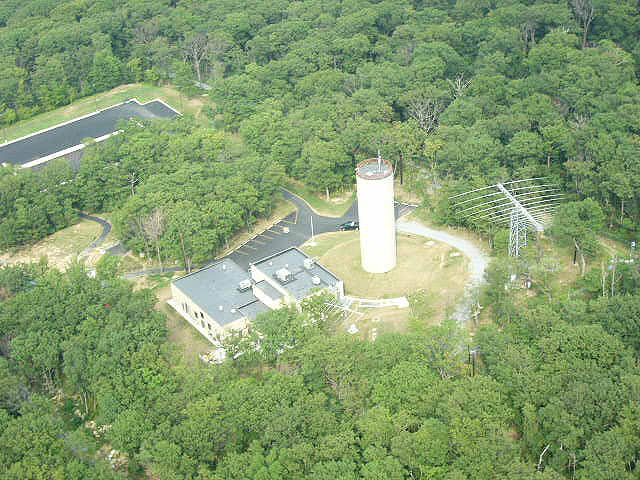
To the casual observer driving down Maryland Route 67 southwest of Boonsboro, the distant object lop of South Mountain looks like a farmer’s silo. Closer inspection would reveal that it is indeed a silo, but not the kind used to store cattle feed. This particular silo belongs to the US Navy and is one of at least three similar Top Secret Navy facilities in the Tri-State area. Two other silos are located atop mountain ridges in Pennsylvania and in West Virginia. Just what goes on inside the silos the Navy isn’t saying? 

After repeated requests to the Navy for information on silos spokesman Ron Black gave this reply, “No information can be released its classified”.

According to residents of the area the Boonsboro silo was built sometime during the late 1960s. Like the others it is served by a narrow but a small road complete with guard rails. Although the Boonsboro silo is still in daily use the one located on Cross Mountain just inside the Pennsylvania state line north of Mercersburg was open earlier this year. The high chain link fence surrounding it has been ripped down and a heavy steel blast door leading into the silo was ajar recently. The silo is equipped with an elevator to each of its eight floors.  Although much of the equipment inside has obviously been removed, much remains... Heavy air conditioning equipment, air filters and electrical panels are still in place.  In an apparent effort to blast proof the equipment the panels are mounted on heavy springs with coiled wire lo take up movement. The silo apparently housed offices.   On the ceilings are fluorescent lamps.  The floors are tiled.

Whatever goes on inside the silos it is not related to the Alternate National Military Command Center near Blue Summit Pa.?  Sources at the Pentagon responsible for The Rock say they do not know anything about the Navy silos.

And until the Navy decides to talk its mysterious silos will remain one of the government secrets in the area plus

In reality these silo's were part of a microwave network that was the backbone of communications for the Presidential Emergency Facilities.

The White House Communications Agency (WHCA) would play a key role in the implementation of Continuity of Government (COG) plan. The Continuity of Government is the principle of establishing defined procedures that allow a government to continue its essential operations in case of nuclear war or other catastrophic events.  In 1954 a plan to implement emergency communications was developed and presented to the Secretary of Defense.  A major element of this plan was an emergency relocation strategy which provided for the dispersal of essential elements of the Federal Government.  This plan also addressed the necessary communications need by the President, and other Governmental agencies.  Because little or no reliable communications were available in the emergency relocation areas, the Army Signal Corps was tasked with the planning, designing, engineering, installing and maintaining the communications support of this program.

These sites were constructed very quietly and actually hidden from the Public but in reality were in plain sight and visible from miles around, several of these Continuity of Government sites were built in Maryland, Pennsylvania, Virginia, West Virginia, and Washington, D.C., these sites  were designed to house large numbers of federal officials in underground bunkers while the exposed concrete towers that housed sophisticated radio equipment kept communications open among the survivors, the military, and civilian populations.  These were among the first relocation facilities built in the 1950s and early 1960s as federal planners conceived of and realized a Federal Relocation Arc extending outwards from Washington were key documents and people could be sheltered during and after a nuclear exchange.

The Federal Relocation Arc included above- and below-ground sites located within a 300-mile radius of the nation’s capital. These sites were administered through the Executive branch’s White House Military Office (WHMO), while the communications personnel were attached to the White House Communications Agency (WHCA). The Presidential Emergency Facilities (PEF) were literally holes in the ground, deep enough to withstand a nuclear blast and outfitted with elaborate communications equipment, funds to support the sites wound their way through a circuitous route in the Defense Department.  All oversight for these facilities originated in the White House Military Office.

These sites in the Arc were the key to ensuring open lines of communications were built in a network that relied upon line-of-sight microwave technology, i.e., each transmitter and receiver had to have an unobstructed line-of-sight between its nearest neighbors for the network to be viable. These microwave hops were usually no more than fifty miles apart. “I’m assuming that when they did their studies they knew specifically where the main terminals were going to be and they looked for locations that they had line of sight, and they were all within forty miles of each other.”


Sunday, June 19, 2022

AT&T Facility Near Mercersburg PA. (1975)


AT&T Site on Hearthstone Mt. in MD.

The Text Content on Page 1 of The Hagerstown Morning Herald, July 25, 1977 is:
       
Arial view of AT&T on Hearthstone Mt. looking at the ridge line to Cross Mt. and Cannonball Tower
Hello, Hello

If there ever is a nuclear war restoring the nation’s telephone network might be one of the first orders of business.

That’s one of the reasons why American Telephone and Telegraph Co has buried a telephone switching station high atop Hearthstone Mountain four miles north of Clear Spring and just two miles from the Navy’s silo on Cross Mountain.

Although it’s not as secret as some government facilities around the area officials explain that the installation is designed to withstand the effects of a nearby nuclear blast.

The station which consists of 70000 square feet in a two and a half story underground building is made of concrete.

The delicate telephone gear inside is mounted on shock absorbers and the outside antennas about the only thing visible from a distance are en-cased in concrete pods

Access to the building is gained huge steel blast doors. Like other hardened sites the station has its own food and water supply. Filtering would remove nuclear particles from the air in the event of an attack.

The Hearthstone station is one of 65 around the world that provides routine telephone global com for the US military.

According to operations manager Bruce Parr the station normally handles only military traffic and in a busy hour it can relay thousands of telephone messages. But the equipment inside the station is standard telephone switching gear and Parr says it could be used to handle emergency or commercial traffic. Two other underground stations are also located in the area. One is at Monrovia in Frederick County and the other at Drainsville, VA near the Maryland, West Virginia and Virginia borders.

Parr says Hearthstone was picked as a site primarily because of its high elevation a, factor vital to reliable microwave communications. The 5.5 million dollar facility was built in the mid-1960s and is manned 24 hours a day by about 30 people according to Parr.

He says doesn’t pretend that nobody knows where or what the station is but he explains that the facility is not open to the public for “safety and for the protection of the personnel who work here”.

Article by PAUL BERTORELLI


Friday, June 17, 2022

Cowpunchers Demolition-revised


Round Top Summit, North Mountain
North Mountain's Round top summit site of Cowpuncher Tower
in the distance seen from Shanghai, WV..


Elevation
 1,673 ft. (509.9 m)
Location
Location
 Berkeley County, West Virginia, USA
Range
 Ridge-and-Valley Appalachians
Topo map
 + 39.419821 N -78.08889 W

North Mountain is a mountain ridge within the Ridge-and-Valley Appalachians in the U.S. state of West Virginia.  The span consists of 20 miles (32 km) of ridge line and is noticeably higher in elevation, containing the mountains highest point of 1,673 feet (510 m) above sea-level at its Round Top summit near Arden in Berkeley County, West Virginia. North Mountain, as early settlers in the eighteenth century referred to the stream as to the "back" of the ridge when approaching it from the east. . North Mountain’s Roundtop Summit is also the site of a deactivated microwave relay station that was used during the Cold War. 

Tower History and Purpose             

Roundtop Summit, on North Mountain and west of Arden WV.  Its proximity to Washington, DC and other key locations made it a prime choice for a microwave relay station during the Cold War. In the late 1950’s/early 1960’s the Federal Government built a station here.

Cowpuncher Tower prior to Demolition

Cowpuncher Tower prior to Demolition
Construction of Cowpuncher tower was complete during the late 50’s early 60’s. Originally named Copper the cylindrical tower was renamed Cowpuncher in 1965.  Cowpuncher was exactly the same construction and served the same purpose as Cannonball.  The tower was part of a microwave network designed to provide communications to the President of the United States and emergency communications in the event of a nuclear attack. The Microwave route connected Camp David, Mt Weather, Site R and other key bodies of government directly to the White House.

Not only would the microwave network provide reliable communications, but the various sites also could serve as relocation facilities to withstand a nuclear attack. From these sites, the President could communicate with and address the American people.

Each facility had equipment to carry voice, video and secure voice and teletype. Of course, with our cellular networks today, such facilities are no longer necessary and even private citizens can communicate as long as the cellular towers still function.

There were seven facilities in the Presidential Emergency Network, each operated by the White House Communications Agency. Manned switchboards and communication centers were at each terminal. These communications centers became active in the event of a national emergency.

The sites were:

Site 1. Cactus Terminal, Camp David, Thurmont, MD
Site 2. Cannonball Relay, Mercersburg, PA
Site 3. Cowpuncher Relay, Martinsburg, WV
Site 4. Cartwheel Terminal, Washington, DC
Site 5. Crystal Terminal, Mount Weather, VA
Site 6. Cadre (or Creed) Terminal, aka Site R, Blue Ridge Summit, PA
Site 7. Corkscrew Relay, Boonsboro, MD
Final Destination. Crown, the White House, Washington, DC

The facility was deactivated in 1970  closed in 1977 and from that point was a popular place late at night with a particular group of people. The tower was demolished around 1983 surprisingly 
it was toppled in one piece.

The demolition of Cowpuncher tower as it fell 
Cowpuncher Tower in its “grave” (it was toppled and buried in place)
Google Earth view of Cowpuncher Tower near Martinsburg WV. Site has been demolished

Cross Section View of Tower 


Monday, April 18, 2022

Communication Units at Camp David


Communication Units at Camp David 

WHCA Camp David Insignia

Elevation
 1,900 ft. (579.1 m)
Location
Location
 Frederick County, Maryland, USA
Range
 Appalachian Mountains
Coordinates
 +39.648333N  -77.466667 W

The White House Communications Agency (WHCA) was originally known as the White House Signal Detachment (WHSD) and officially formed by the United States Department of War on 25 March 1942 under President Franklin D. Roosevelt. The WHSD was initially created to provide normal and emergency communications requirements in support of the President as well as mobile radio, teletype, telephone and cryptographic aides in the White House and at Camp David (originally known as Shangri-La).          

In April 1942 President Roosevelt visited Camp David and chose it as the Presidential retreat. On July 5th, 1942 the President inspected the finished retreat and this began the lineage of the present day Special Missions Command.  In the early years, members from the White House Signal Detachment would travel in advance of the President to Camp David and support all communication requirements. During President Roosevelt's presidency he visited Camp David a total of 22 times.

As the new Camp increased in usage between 1942 and 1951, the Agency decided to permanently assigned personnel to Camp David. In 1951 the first member was assigned to Camp and over the subsequent months the detachment would be filled with new members. As the detachment started to take shape one of its first missions would be assigned. Late in 1942 right after the WHSD was formed President Roosevelt was presented a newly rebuilt Ferdinand Magellan train car. During the history of the Presidential Rail Car, it was the responsibility of the White House Signal Detachment to support with all communications. After the forming of the Field Branch Division at Camp David around 1953 it was decided that due to the proximity of the storage depot in Harrisburg, PA and the need for a specialized group of members to operate, the FBD would be the permanent caretakers. The FBD would ensure the communication car would be ready for the President at a moment’s notice. During the history of the Communications Car, it would travel a estimated 250,000 miles in support of seven President’s. The train’s last official trip was in 1954, but remained a WHSD responsibility well into the 1970’s.

In 1954 the White House Signal Detachment was reorganized and renamed the White House Army Signal Agency (WHASA).

As the reorganization took shape, the Field Branch Division was given more responsibility under the new WHASA. In early 1955 it was decided that any enduring requirements outside of Washington, DC would be the responsibility of the FBD headquartered at Camp David. During the early years of the Command the requirement to provide communications at the sitting President’s private residence was established and fell under the FBD at Camp David. During President Eisenhower’s administration this requirement officially began and members from Camp David would support the Eisenhower Farm in Gettysburg with Radio, Microwave and switchboard communications when the President would travel home. The mission of supporting the President’s private residence has evolved from the President Eisenhower’s private farm in Gettysburg, PA, to President Johnson's Ranch in Johnson City, TX and remains a core responsibility today at President Obama's home located in Chicago, IL. Other locations that the Detachment managed over time were President Kennedy's home in Hyannis Port, MA, President Nixon's home in San Clemente, CA and Key Biscayne, FL, President Carters home in Plains, GA, President Reagan's Ranch outside of Santa Barbara, CA, President George H.W. Bush's home in Walker's Point, ME and President George W. Bush's home in Crawford, TX.

Around 1995 the practice of providing a similar capability for the Vice President was implemented and continues to this day with Vice President  residence.

Late in 1954 a plan to implement emergency communications was developed and presented to the Secretary of Defense. The plan was approved and construction began on a series of emergency facilities around the United States. The construction took from 1955 to the early 1960’s to complete, the construction included a series of Presidential Emergency Communications facilities around the Washington, DC area. These facilities became a key part of the Camp David Detachment's history and would take the Detachment into one of its most historic missions. During the height of the Cold War the Camp David Detachment would provide 24/7 support for seven newly established microwave relay towers scattered across the mountains of the Virginia, West Virginia, Maryland and Pennsylvania. As this mission took shape members of the Detachment would deploys for weeks at a time to these remote towers to operate and maintain the emergency communications requirements. This mission remained a core responsibility of the Detachment until the towers were deemed no longer needed due to satellite communications and all towers were officially closed or transferred to other Agency’s between 1970 and 1985. It is this piece of the detachments history where the popular call-sign CACTUS was created and is still used today. This call-sign dates back to the late 1950’s after the Tower system was commissioned and remained the name of a tower until it was demolished.

As the Field Branch Division continued to operate as a separate command under the WHASA it was decided that small detachments were needed. These detachments would be responsible for geographically separated mission requirements and would operate under the supervisor of an Army Warrant Officer. These detachments were Detachment 1 responsible for the Cactus and Cannonball Towers, Detachment 2 responsible for the Crystal and Cowpuncher Towers, Detachment 3 responsibility for the Creed/Cadre Tower complex and the Eisenhower Farm and Detachment 4 responsibility for Cartwheel, Corkscrew and Canteen Towers.

In 1962 the WHASA was discontinued, and its duties were transferred to the auspices of the Defense Communications Agency under the operational control of the White House Military Office (WHMO), and reestablished as the White House Communications Agency (WHCA). At that point WHCA was divided into three units: The Defense Communications Operations Unit (DCOU) and Defense Communications Administrative Unit (DCAU) both located in Washington, DC and The Defense Communication Support Unit (DCSU) headquartered at Camp David and maintaining responsibility for the operation of seven Presidential Emergency Facility (PEF) locations and the communications equipment on the Presidential Train “CRATE” in Harrisburg, Pa, as well as the Camp David complex.

During the decommissioning of the first microwave towers in 1969, members assigned to these Detachments would be repurposed and relocated across the United States. This new mission would again require a small group of specialized members who could master the requirements and training needed to operate geographically separated from the WHCA headquarters. The formation of the Communications Contingency Teams was the Agency’s answer to this new need. These teams were strategically placed to support the President and played an important role in the Emergency and Contingency communications support established during the height of the Cold War. These teams started in Ft. Richie, MD, Key Biscayne, FL and San Clemente, CA but over time moved to El Toro, AZ, Andrews AFB, MD and Berryville, VA                                                                           

By 1983 all CCT teams renamed from Contingency Team to Support Team and made a strategic move to Carswell, AFB, TX, Luke AFB, AZ, and the team at Andrews AFB was renamed and support stayed the same. The CCT’s and CST’s were highly mobile groups that could be deployed at a moment’s notice. One of the original CCT/CST’s remained active and later transferred to the Washington Area Communications Command and finally disbanded in 2014. 

As the Detachments history continued to evolve, one of the original missions remained active throughout its long history. The mission of supporting the Presidential Retreat at Camp David, MD has been a continuous mission since the first member was assigned in 1951. During the detachments history the Service members of the Command have provided support for over 860 separate visits by 13 Presidents over a 75 year period. Over the past 75 years the Detachment has continued to support and upgrade Camp David to meet the ever changing communications required to support the President, Commander in Chief and Chief Executive of the United State. It is estimated that over 3,000 Soldiers, Sailors and Airmen have been part of the Command in its 65 year history.

After the CCT and CST teams were officially closed, the Command was assigned a contingency mission that would fill a major post-cold war requirement. Similar to the CCT’s mission when it was created the members of the Camp David detachment would be responsible for preparing for the “Bad day Scenario”. In order to meet this new requirement, members would remain in a ready state and exercise routinely to ensure response requirements were always met. On Sep 11th 2001 the “bad day” call would be received and members told to execute. Members of the Bolt Out of the Blue (BoB) team executed its Emergency Action mission and departed for their assigned location. While this team was in full swing, the Camp David switchboard would also be fully engaged in the day’s happenings and would be providing never before call volume and requests. While the morning unfolded it was determined that the Vice President would be relocated to safety of Camp David and members from the Detachment would support him for the next 2 weeks. The Command and its members provided unprecedented support on Sep 11th, 2001 and has shaped many of today’s emergency action requirements and tasks. 

In 2002 the Detachment was renamed the Special Missions Command and has remained largely unchanged through present day; the Command operates in 5 geographically separated locations while continuing to make history for the Agency. As the Government updated their contingency operations orders and plans in 2003, WHCA was tasked with creating and maintaining a Continuity of Operations facility that would ensure all services being provided by WHCA would be available should a major issue affecting Washington DC cause services to be limited. In late 2003 the Agency opened the Signal Support Element which established a facility outside of Washington, DC designed to ensure communication reliability for the President and all White House staff and supporting Agency’s. The Command continues to support this mission today with 3 permanently assigned members with support from Camp David and WHCA Headquarters as needed.                                                            

In 2015 as the Agency and Special Missions Command began supporting All White House computer and network requirements it was discovered that a more robust call center was required to supporting the increase of over 3,000 White House customers. The Command was again called upon to solve a major issue facing the Agency. In late 2015 the Special Missions Command stood up the White House Information Technology Service Call Center at Camp David and began providing unprecedented support to the newly converted White House staff.

As the travel and customer service requirements began to pick up it was determined that with the changing technology and pace required a change in how the Command trained and equipment it members. At the beginning of 2016 the Special Missions Command conducted a major personnel and mission capability shift which established a team of well-rounded and highly cross-trained members. Out of this needed change was born the Special Missions Command, Cross Functional Team who assumed the enormous task of providing all travel and Emergency Action support for the President while at Camp David, the President and Vice President while at their private residence and routine travel support for the President and Vice President around the world.

Today the Special Missions Command is made up of 92 Soldiers, Sailors, Airmen and Civilian's. These men and women are charged with the task of leading the Agency's Special Missions as directed by the Commander, White House Communications Agency. The present day Special Missions Command is organized into 8 sections and spans over 5 geographically separated locations. At Camp David the Command has the Cross Functional Team, Camp David Switchboard (CACTUS), White House Service Center and an Operations section that includes, admin, supply, infrastructure, security, and maintenance personnel. Additionally the Command has 4 locations not located on Camp David. These locations are Chicago, IL (President Obama's residence), Wilmington, DE (Vice President Biden's residence) and 2 other classified locations.

The history of Presidential Communications began with the opening of Camp David, supporting the Presidential Train and manning the critical microwave tower network, shifted to cold work contingency support around the united states and Presidential private residence support, then played a key support role during the terrorist attacks on Sep 11, 2001 and continues today with WHCA assuming all computer and network services for the President, Vice President, and all White House staff.  Members of SMC continue to support all WHCA missions and remain the primary proponent for all permanent missions outside of the National Capitol Region. 

WHCA COMMANDERS

1          COL                    George J. McNally                   Mar 1946 to May 1965

2          BG                       Jack A. Albright                      May 1965 to Jun 1969

3          BG                       Albert Redman, Jr.                   Jun 1969 to Jan 1973

4          BG                        Lawrence E. Adams               Jan 1973 to Sep 1975

5          BG                       Leonard J. Riley                       Sep 1975 to Jun 1977

6          COL                    Robert F. Feely                       Jun 1977 to Nov 1977

7          COL                    Edwin Cantrell, III                  Nov 1977 to May 1978

8          BG                       Josiah Blasingame, Jr             May 1978 to May 1981

9          MG                      Henry J. Schumacher              May 1981 to Jun 1982

10        BG                       John S. Tuck                            Jun 1982 to Jan 1984

11        COL                    Lawrence Schuman                Jan 1984 to Sep 1985

12        COL                    William V. Bogart                   Sep 1985 to Dec 1988

13        COL                    Kenneth E. Nickel                  Dec 1988 to Feb 1992

14        COL                    Thomas J. Hawes                     Feb 1992 to Oct 1994

15        COL                    Joseph J. Simmons, IV            Oct 1994 to Nov 1998

16        COL                    Kenneth Campbell                  Dec 1998 to Feb 1999

17        BG                       Dennis Moran                          Feb 1999 to Apr 2000

18        COL                    Margaret Baldwin                    Apr 2000 to Jul 2001

19        COL                    Michael McDonald                  Jul 2001 to Jul 2004

20        COL                    Howard Cohen                         Jul 2004 to Aug 2006

21        COL                    James Lien                               Aug 2006 to May 2009

22        COL                    Michael Black                          May 2009 to Jul 2011

23        COL                    Clinton Bigger                         Jul 2011 to Nov 2013

24        COL                    Donovan Routsis                     Nov 2013 to August 2015

25        COL                    Cleophus Thomas, Jr              August 2015 to August 2016

26        COL                    Chad D. Raduege                     August 2016 to June 2018

27        COL                    James F. Riley                        June 2018 to January 2021

28        COL                    Joy M. Kaczor                        January 2021 to ?                                                                                              

FBD,DCSU and SMC Commanders

Command Formed as Field Branch Division (FBD)

1          LTC                     Gordon Parks                          (1958-1962)

2          CPT                     Earl Dunn                                (1962-1966) 

Command Reflagged as Defense Communications Support Unit (DCSU)

3          MAJ                    John Duguay                           (1966-1969) 

4          MAJ                    Charles Freed                          (1969-1972) 

5          MAJ                    Richard Barnett                       (1972-1973)

6          CDR                   George Brenton                      (1973-1981)

7          CDR                   Robert Ohm                            (1981-1983)

8          LCDR                 Ed Barger                                (1983-1985) 

9          LCDR                 Charles Finley                         (1985-1987) 

Command HQ relocated to Washington, DC and Camp David Detachment became separate Command)

10        CW4                    Jim Straight                               (1988-1990) 

11        CW4                    Gordon Errington                     (1991-1995) 

12        LT                       Darlene Gunter                          (1995-1997) 

13        LTC                     Michael Briske                          (1997-1999) 

Command Reflagged as Special Missions Command (SMC)

14        LTC                     Timothy Lake                            (2001-2003) 

15        LTC                     Tracy Amos                               (2003-2004) 

16        LTC                     Kirby Watson                            (2004-2007) 

17        LTC                     Charles Daly                             (2007-2010) 

18        LTC                     Jeth Rey                                    (2010-2012) 

19        LTC                     James Chastain                         (2012-2015) 

20        MAJ                    Chad Ott                                   (2015-?)   

Senior Enlisted Leaders

Command Reflagged as Defense Communications Support Unit (DCSU) (1964 to 1996)

1         SGM                   Victor Shorten                          (1964-1969)  

2         SGM                   Milton Cauthen                        (1969-1974)

3         CMSgt                Francis Orehowsky                  (1974-1978)

4         SGM                   Leo Scherping                          (1978-1980) 

5         Master Chief      Wally Sparks                             (1980-1982)  

6        SMSgt                Donald Brummentt                    (1982-1983)

7        SGM                  Charlie Grunden                         (1983-1986)  

8        MSG                  Frank Conway                            (1986-1989)  

9        MSG                  Charles Hayes                             (1989-1992) 

10      MSG                  Raymond Hrynko                        (1992-1995) 

11      1SG                    Trudy Beltz                                  (1995-1996) 

Command Reflagged as Special Missions Command (SMC) 1996-2001?

1996-2001?

12     1SG                    Eric Campbell                             (2001-2003) 

13     1SG                    Lindsay Thompson                      (2003-2004) 

14     1SG                    Gilbert Rowan                             (2004-2007) 

15     1SG                    Thomas Pacheco                          (2010-2012)  

16     1SG                    Joseph Dorey                               (2012-2014)  

17     1SG                    Jason Walker                                (2014-2017)  

18     1SG                    Freddie Suber                               (2017 to ?)